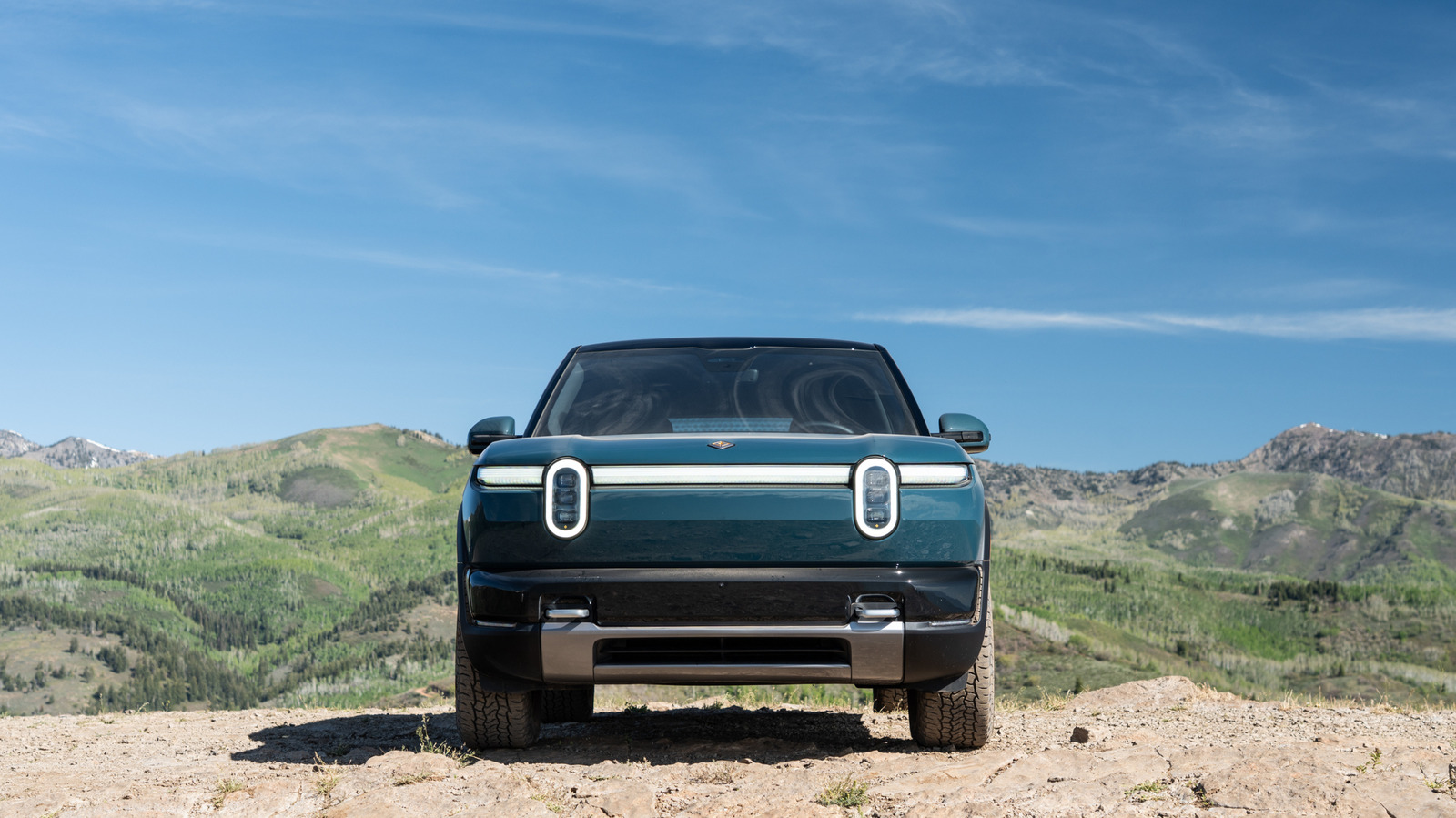
Rivian has sold 175,000 vehicles since the R1 launched in 2021, while Tesla sold 8 million in the same period, according to a WIRED interview with Rivian CEO RJ Scaringe. The company lost $3.6 billion in 2025 and has burned nearly $25 billion over eight years. Its stock dropped from $130 to around $16. Despite these losses, Rivian secured major partnerships: Volkswagen Group committed up to $5.8 billion in 2024 for software development, and Uber announced a $1.25 billion investment to develop up to 50,000 autonomous robotaxis.
1.jpg)
R2: The Make-or-Break Product
Scaringe emphasized that the upcoming R2 SUV must not just sell but sell in large numbers. 'The company needs its new R2 SUV to work,' the article states. For manufacturing executives, this signals a critical production scale-up challenge. Rivian's ability to ramp up factory capacity to achieve mass production will determine its survival. The R2 is positioned to compete with the Tesla Model Y, which together with the Model 3 holds 50 to 60 percent of the US EV market share, according to Scaringe.
Industry Observations: Cybertruck and Polestar
Scaringe called the Tesla Cybertruck a 'very, very niche' product, noting design trade-offs that limit mass appeal. 'It's going to end up very niche for them,' he said. On Polestar, he said the 'whole package—price, content, features—just hasn't connected with consumers.' These comments highlight the difficulty of balancing design and scalability in EV manufacturing.
Partnerships and Financial Backing
| Partner | Investment / Commitment | Purpose |
|---|---|---|
| Volkswagen Group | Up to $5.8 billion (2024) | Co-develop software and electrical architecture |
| Uber | Up to $1.25 billion (2026) | Build and deploy up to 50,000 autonomous robotaxis |
The Volkswagen joint venture targets software-defined vehicle technologies, while Uber's investment focuses on autonomous robotaxis. For procurement professionals, these tie-ups suggest Rivian will need to manage complex supply chains for both conventional EV components and autonomous systems.
Production and Financial Metrics
Rivian's R1 (pickup and SUV) has been in production since 2021. The company's IPO was the largest globally in 2021, briefly valuing it over $100 billion. However, cumulative losses of $25 billion underscore the capital intensity of automotive manufacturing. The R2's success will hinge on achieving economies of scale to lower per-unit costs—a classic manufacturing challenge.
For industrial executives, the takeaway is clear: Rivian's path to profitability depends on ramping R2 production while maintaining quality and controlling costs. The partnerships with VW and Uber provide cash and technology, but execution at the factory level will decide the outcome. As Scaringe noted, the US market needs more EV choice beyond the Model 3 and Model Y, and the R2 aims to fill that void.