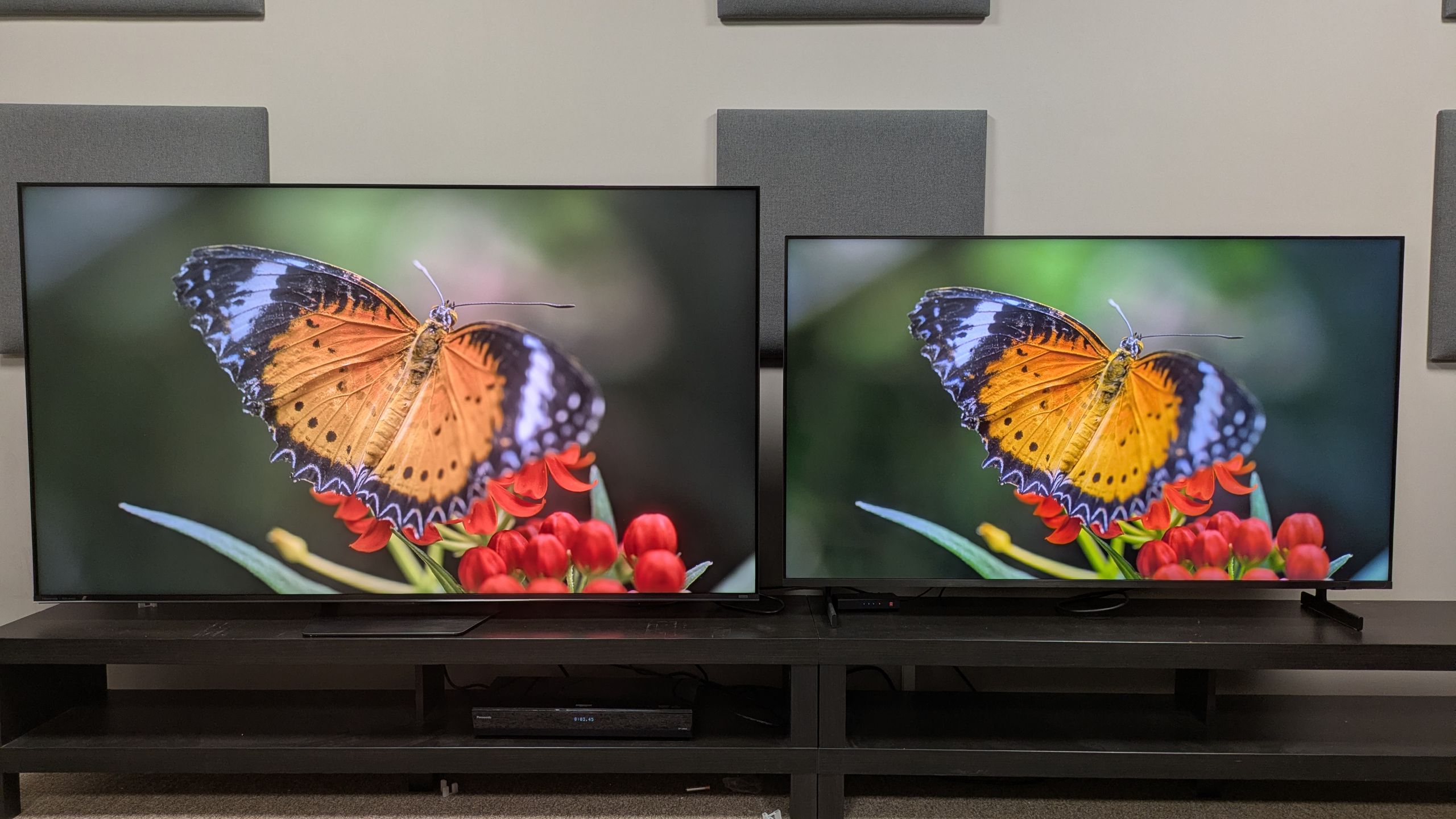
A side-by-side comparison of two similarly priced 65-inch TVs — the Hisense UR8 (RGB mini-LED) and the Samsung QN80H (standard mini-LED) — reveals distinct differences in color performance that may influence consumer preferences and manufacturing strategies.
Color Performance: Samsung vs Hisense
According to TechRadar, the Samsung QN80H delivered "much more vibrant" colors when playing scenes from Wicked and La La Land. The pink flowers and blue decorations appeared more saturated on the Samsung, while the Hisense UR8 produced more natural but less punchy colors. In Cinema mode, the Hisense UR8's colors looked accurate but lacked the "wow factor" of the QN80H. Switching the UR8 to Standard mode increased vibrancy but made colors appear "a bit too artificial."
Pricing and Technology
The 65-inch Hisense UR8 costs $1,799 (AU$2,395) and is not yet available at UK retailers, while the 65-inch Samsung QN80H sells for $1,599 (£1,599 / AU$2,199). Hisense introduced RGB mini-LED in 2025 with the flagship 116UX model, but the UR8 marks the first budget RGB mini-LED TV. Samsung's QN80H uses traditional mini-LED, which remains competitive.
Manufacturing Implications
For electronics manufacturers, the comparison underscores the evolving landscape of display technology. RGB mini-LED offers potential for improved color accuracy but current implementation at mid-range prices may not surpass the vibrancy of established mini-LED solutions. The similar pricing indicates that cost parity has been achieved, making RGB an option for OEMs seeking differentiation. However, the performance gap suggests that traditional mini-LED still holds advantages in brightness and color saturation.
Production Timeline
The Hisense UR8 is currently available in the US and Australia, with UK availability yet to be announced. Samsung's QN80H is widely available across markets. Both models are current-generation products, with no future capacity or investment data disclosed in the source.
Sources: