For supply chain leaders who manage temperature-sensitive agricultural supply chains, the dominant narrative around post-harvest loss has long been one of food security: reduce waste to feed more people. But according to a recent analysis in The Hindu BusinessLine, that framing is incomplete. Before it is a food security problem, post-harvest loss is a farmer income problem — and the distinction has direct implications for how cold chain investments are prioritised.
The scale of the loss
India produced 357.73 million tonnes of foodgrain in 2024–25, a record for a country feeding 1.4 billion people, according to the source. Yet approximately 74 million tonnes of food are lost every year after harvest — in transit, storage, at the mandi, or on the loading dock. For fruits and vegetables specifically, government-commissioned data puts losses at between 6 and 15 per cent for fruits and between 5 and 12 per cent for vegetables. Researchers estimate the annual value of post-harvest losses at ₹1.5 lakh crore, a figure that is distributed across millions of farm households.
| Category | Loss range |
|---|---|
| Fruits | 6–15% |
| Vegetables | 5–12% |
Why framing matters
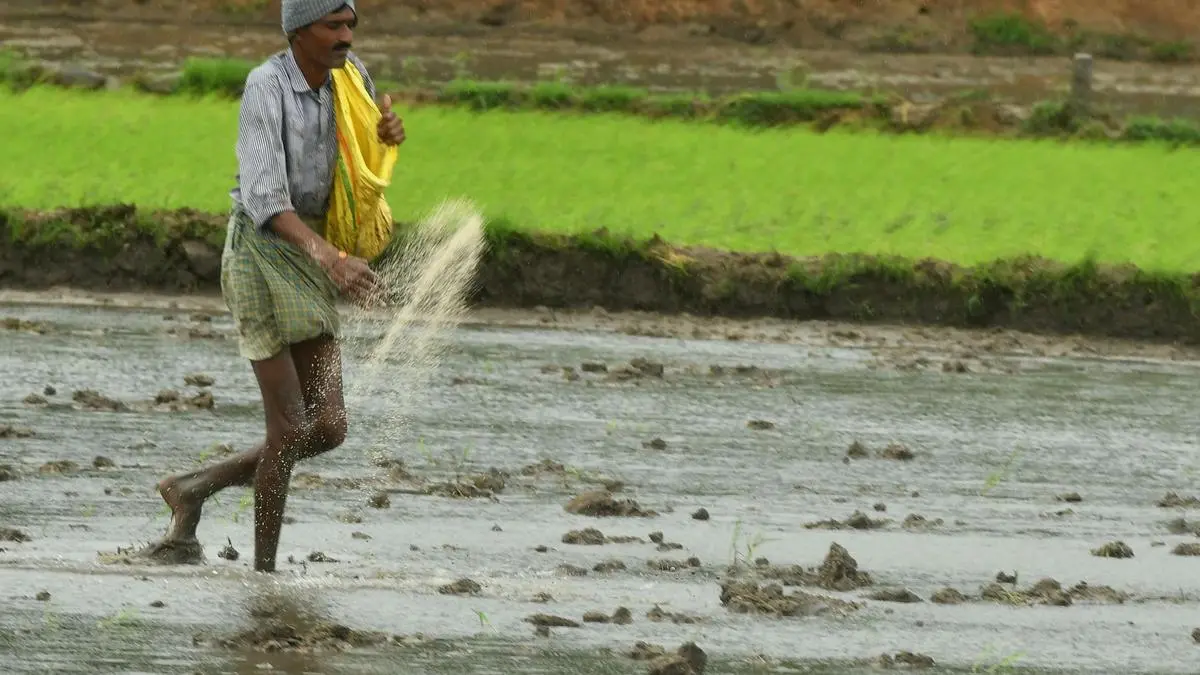
The article argues that when post-harvest loss is treated primarily as a food security problem, the instinct is to build large-scale infrastructure: national cold chain corridors, mega warehousing hubs, and centralised processing facilities. While not bad investments, these have long gestation periods and tend to serve the middle and end of the supply chain better than the farm end. Over 85 per cent of India’s farmers are smallholders, and their experience is not abstract. The smallholder sees his onions rotting because the nearest cold storage is full, or too expensive, or too far. He sees prices crash at the mandi because every farmer harvested at the same time with no mechanism to stagger supply. He sees the intermediary pricing in risk — spoilage, transport, uncertainty — directly out of his share.
If, instead, post-harvest loss is reframed as a farmer income problem, the focus shifts to different questions. Why does a smallholder have no option but to sell immediately at harvest when prices are lowest? Why is there no affordable storage within reach of a cluster of villages? Why does a farmer not know the price difference between the mandi 20 kilometres away and the one 40 km away before loading produce onto a truck? Why is last-mile logistics from farm to first aggregation point almost entirely informal, undependable, and priced against the farmer?
A supply chain design challenge
The implication, according to the source, is that the solutions are not infrastructure questions at the national scale — they are service design questions at the local scale. Village-level aggregation, micro cold storage that a group of farmers can collectively access, better real-time market information, and coordination on harvest timing to avoid gluts do not require massive capital. They require the supply chain to be designed with the farmer’s position in mind, not just the consumer’s convenience or the processor’s efficiency.
What this means for procurement teams
For procurement directors and supply chain officers sourcing perishables from Indian agriculture, the reframing has practical consequences. If the limiting factor is not cold chain capacity but access at the farm gate, then investments in centralised cold storage may not address the root cause of loss. Instead, resources should flow toward decentralised, low-cost cooling solutions; market information platforms that help farmers decide when and where to sell; and logistics models that aggregate produce at the village level before moving it into the formal cold chain. The article notes that this reframing does not make the food security argument weaker — it simply ensures that the solutions reach the farmer who bears the real cost of loss, which is income that was grown but never earned.
For supply chain leaders, the message is clear: reducing post-harvest loss requires a strategy that starts at the point of harvest, not at the processing hub. The cost of inaction is not just wasted food — it is the erosion of farmer livelihoods, a risk that ultimately destabilises the entire agricultural supply base.
Sources: