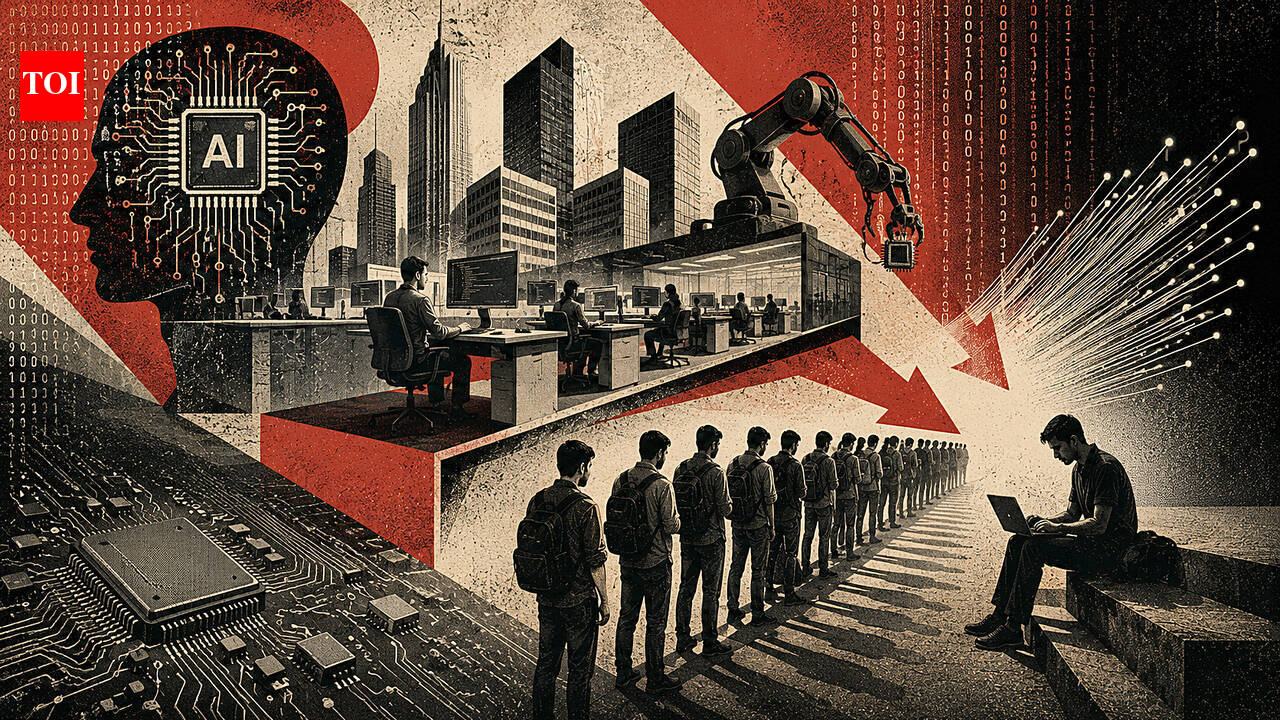
India, the world's back office for many global companies, is emerging as a key test case for artificial intelligence's impact on employment, with AI-related hiring outpacing job losses so far, according to Nomura Holdings Inc.
AI Hiring Outpaces Job Cuts in India
The country's sheer scale means it is seeing the "largest absolute impact" from AI across layoffs, hiring freezes and recruitment, making it "ground zero" for assessing the technology's effect on jobs, Nomura economists Sonal Varma and Si Ying Toh wrote in a report analysing 69 anecdotes across Asia, mostly from 2022 through August 2026.
Key figures from the report, released Friday:
- India recorded 83,100 AI-related hires during the period.
- India recorded 31,921 layoffs and attrition in the same window.
- Across Asia, AI-related hiring totalled 130,758 jobs, with more than 90% of those positions in technology.
- Across Asia, 60,654 jobs were lost, about 60% of them in financial services.
| Region | AI-related hires | Layoffs and attrition |
|---|---|---|
| India | 83,100 | 31,921 |
| Asia total | 130,758 | 60,654 |
"Most firing cases are support teams replaced by chatbots, while most hiring cases are of IT-services graduates that firms explicitly credit to AI demand," the economists said. The finding "runs counter to the narrative of massive job losses due to growing AI adoption" and suggests that, at least in the early stages of the AI revolution, job creation is more than offsetting displacement, according to the report. That pattern is evident in large economies such as India and China, as well as in the Philippines, where business process outsourcing plays a central role in the labour market.
A Two-Tier Labour Market Emerges
AI adoption is creating a two-tier labour market in countries like India and Korea, reducing demand for entry-level workers while boosting demand for more experienced employees with a deeper understanding of the business context, the economists added. The headline numbers obscure the fact that AI is creating a different set of winners and losers in the labour market.
"Since displaced workers rarely transition to AI engineering roles, the aggregates do mask distributional pain."
Caveats for Enterprise Technology Leaders
For enterprise technology decision-makers assessing AI's workforce impact, the report's methodology matters. Nomura cautioned that the findings were indicative of broader trends rather than absolute job numbers, as Asia's labour market remains fragmented and the analysis was based on news reports.
The report found that most firing cases involve support teams replaced by chatbots, while most hiring cases involve IT-services graduates that firms explicitly credit to AI demand. The economists also described a two-tier labour market in India and Korea, with reduced demand for entry-level workers and increased demand for more experienced employees who understand business context. For organisations in the Philippines and other outsourcing-reliant markets, the same pattern is evident, the economists said.
Sources: