For executives tethered to desks for hours on end, the connection between seat time and back pain is no mystery. But the fix may be simpler than many realize. Elite performance coach and Hollywood trainer David Higgins — whose client list includes Scarlett Johansson, Margot Robbie, Samuel L. Jackson, and David Harbour — says a single fundamental movement can reverse the dysfunctional patterns that lead to chronic lower back issues.
The Glute Dysfunction Epidemic
Years of prolonged sitting — in office chairs, cars, and sofas — gradually teach the body to stop engaging the glute muscles properly, according to Higgins. This condition rarely announces itself clearly. Instead, it manifests as tight hip flexors, persistent lower back tension, strained hamstrings, or instability when standing on one leg.
“Desk-bound lifestyles teach the body to live in hip flexion, which switches the glutes off over time.” — David Higgins
When the glutes fail to activate, the lower back overworks to stabilize the pelvis. Higgins explains, “The glutes help stabilize the pelvis. When they stop doing their job, the lower back overworks to create stability. Where you feel pain is often not where the real problem lives.” Treating the back while ignoring glute dysfunction merely manages symptoms.
Why the Hip Bridge Works
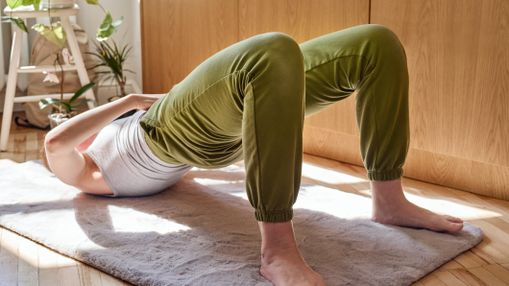
The hip bridge isolates the glutes and retrains proper activation patterns without requiring equipment or a baseline fitness level. Higgins emphasizes that results can be rapid: “If someone's desk-bound but consistent, they can usually begin restoring proper glute activation within 2–6 weeks. The body adapts to repetition — both good and bad.”
His coaching cue is straightforward: “Ribs down, squeeze the glutes before you lift.” The movement should originate from glute extension through the hips, not from arching the lower back. “Posture dictates muscle recruitment,” he adds.
Proper Technique: Step by Step
| Step | Instruction |
|---|---|
| 1 | Lie on your back with knees bent and feet flat on the floor, hip-width apart. |
| 2 | Brace your core, squeeze your glutes, and drive through your heels. |
| 3 | Lift your hips until your body forms a straight line from shoulders to knees. |
| 4 | Pause at the top, then lower slowly. |
| 5 | Repeat for 10–15 repetitions, focusing on glute engagement throughout. |
Common mistakes include flaring the ribs, overextending the spine, rushing reps, and pushing through toes instead of heels. Higgins warns that such errors undermine the exercise's effectiveness.
Implications for the C-Suite
For senior executives and decision-makers whose productivity depends on physical well-being, the hip bridge offers a low-cost, high-return intervention. The 2–6 week timeline for glute reactivation aligns with typical business improvement cycles, making it a feasible addition to daily routine. While the article does not address corporate wellness programs directly, the prevalence of sedentary work among executives underscores the relevance of this simple yet targeted exercise. Investing 5–10 minutes per day in hip bridges could reduce absenteeism due to back pain and enhance cognitive focus through improved physical comfort.
Next Milestone
As evidence continues to mount linking sedentary lifestyles to chronic pain, the adoption of evidence-based corrective exercises like the hip bridge is expected to rise among health-conscious professionals. Higgins' endorsement from top-tier Hollywood talent further validates the approach for broader corporate audiences.
Sources: