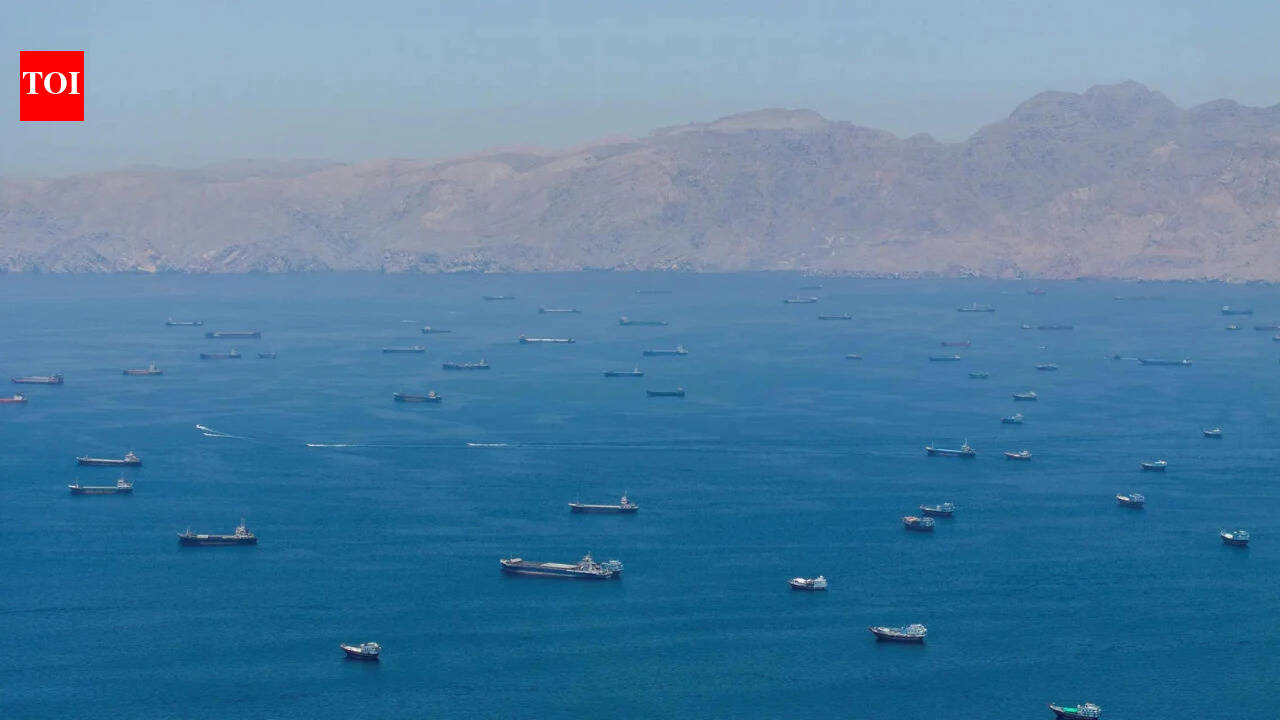
Crude oil prices sank 2% on Friday, June 26, 2026, and were on track for steep weekly losses as easing supply concerns from the resumption of shipments through the Strait of Hormuz outweighed fresh geopolitical risks, including a vessel strike near Oman and earthquakes in Venezuela, according to Reuters.
Brent crude futures fell $1.47, or 1.95%, to $73.79 a barrel as of 0421 GMT, while U.S. West Texas Intermediate (WTI) dropped $1.44, or 2%, to $70.48 a barrel. Both benchmarks are headed for losses of around 8% this week, the report said.
Supply Resumption at Hormuz and Saudi Aramco Loading
Refining giant Saudi Aramco resumed oil loading on Friday at its Ras Tanura terminal in the Gulf after a near four-month halt, according to shipping data from LSEG. The data showed two Very Large Crude Carriers (VLCCs) loading crude at the terminal, with another waiting nearby. Each VLCC is capable of loading 2 million barrels of oil.
Crude shipments through the Strait of Hormuz rose this week to their highest level since the U.S.-Israeli conflict with Iran began in February, after a ceasefire deal reopened the waterway, data showed on Thursday. However, overall traffic remains a fraction of the daily average of 125 ships that passed through the strait before the February 28 conflict began.
ING analysts wrote in a note: “Much of the increase reflects previously stranded vessels leaving the Persian Gulf. Vessel flows into the Gulf remain much more modest. It suggests that once stranded vessels have moved out, we could see a pullback in flows.”
Demand Weakness in China Weighs on Prices
Despite the supply boost, demand-side factors limited the price recovery. “There is a general selloff as the market reacts to the increased flows exiting the Strait of Hormuz and China not yet picking up crude demand,” said June Goh, senior oil market analyst at Sparta Commodities.
| Benchmark | Price (USD/bbl) | Daily Change | Weekly Change |
|---|---|---|---|
| Brent crude (September 2026 ICE) | $73.79 | -$1.47 (-1.95%) | ~ -8% |
| WTI crude (August 2026 NYMEX) | $70.48 | -$1.44 (-2.00%) | ~ -8% |
Geopolitical Risk: Vessel Hit Near Oman
Both benchmark contracts had jumped more than 2% on Thursday after a cargo vessel was hit by an unknown projectile near Oman, prompting the U.N. shipping agency to suspend its voluntary evacuation scheme. Two U.S. officials told Reuters that Iran fired on the cargo ship as it attempted to pass through the strait. Iranian authorities said the security of vessels passing outside designated Hormuz routes is not guaranteed.
Venezuela Earthquake Adds Supply Uncertainty
Additionally, earthquakes in Venezuela that happened on Thursday raised supply concerns. Preliminary assessments by workers of Venezuela’s vast oil, gas and refining infrastructure so far showed limited damage, as most of the country’s largest output regions, refineries, pipelines and terminals are far from the hardest-hit areas. Still, a lack of power has cast doubt on whether oil output can be sustained at its pre-earthquake level of close to 1.2 million barrels per day, sources said.
For commodity traders and analysts, the net effect of these crosscurrents—rising flows from Hormuz, weak Chinese demand, ongoing geopolitical friction, and potential Venezuelan output risks—will be closely watched in the coming sessions, with key data releases from the U.S. Energy Information Administration (EIA) and IEA reports due next week.
Sources: