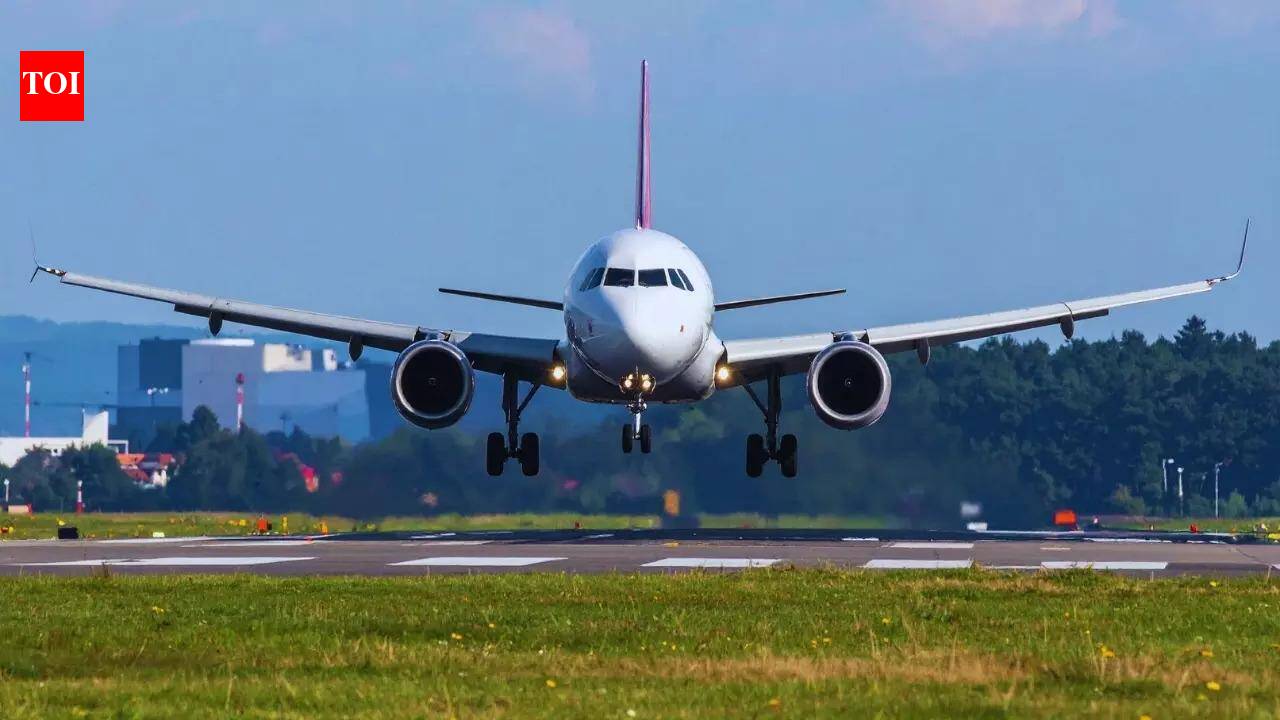
Crude oil prices have fallen sharply from above $100 per barrel to near pre-war levels, according to a Business-Today report, raising the prospect of relief for air travellers. The Indian government is now weighing whether to ask airlines to reduce surge charges and additional fare components if the decline in aviation turbine fuel (ATF) prices proves durable.
Government Response and ATF Pricing Framework
On Thursday, Civil Aviation Minister K Ram Mohan Naidu told reporters that the government is closely tracking ATF prices and holding discussions with airlines to determine whether the recent decline is likely to continue. "Secondly, now that we are seeing prices coming down, we still have to see if this is a long-term reduction or if it is sudden, and we are talking to the airlines on this," Naidu said, as quoted by ANI.
ATF prices in India are reviewed by the government every fortnight based on movements in global crude oil prices. To cushion airlines from financial stress arising from the West Asia crisis, the government has set up a Rs 10,000 crore price stabilisation fund.
| Government Measure | Details |
|---|---|
| Price Stabilisation Fund | Rs 10,000 crore set up to support airlines during financial stress from the West Asia crisis. |
| ATF Price Cap | Capped ATF prices for domestic scheduled operators. |
| Airport Charges | Reduced airport charges for airlines. |
| Emergency Credit Linkage Scheme | Extended support under this scheme to help airlines. |
Conditions for Fare Reduction
Naidu emphasised that any decision on fare-related charges depends on sustained price stability. "The last 4 months have been very important for the airlines... Once we are clear that price stability will continue for a long time, we will talk to them and work towards reducing the surge charges or the extra prices we are seeing right now," he told ANI.
The report noted that global crude benchmarks had earlier surged beyond $100 per barrel, making air travel costlier due to a sharp rise in ATF prices and surcharges. With crude now falling close to pre-war levels, the government is assessing whether the decline is temporary or long-term before pressing airlines to reduce fares.
Outlook for Aviation Fuel Costs
For commodity traders and analysts, the key question is whether the current crude oil price weakness will persist. The Indian government's fortnightly ATF price review mechanism means that any sustained decline in global crude benchmarks will quickly feed into lower domestic ATF prices. The Rs 10,000 crore stabilisation fund provides a buffer for airlines, but the minister's conditional language leaves scope for further action only if the market stabilises. Market participants will focus on upcoming global crude inventory data and OPEC+ decisions to gauge the durability of the current price level.
Sources: