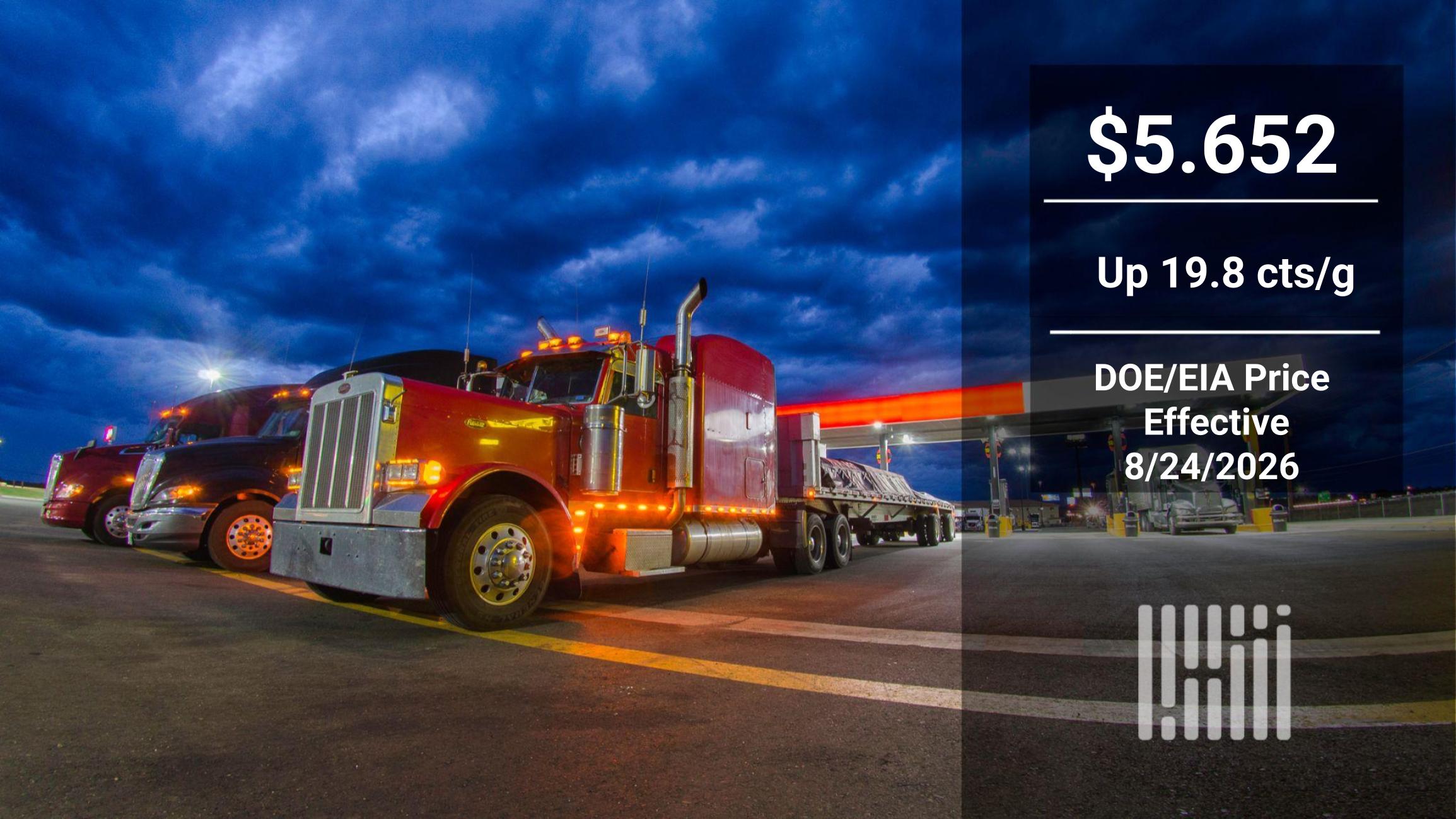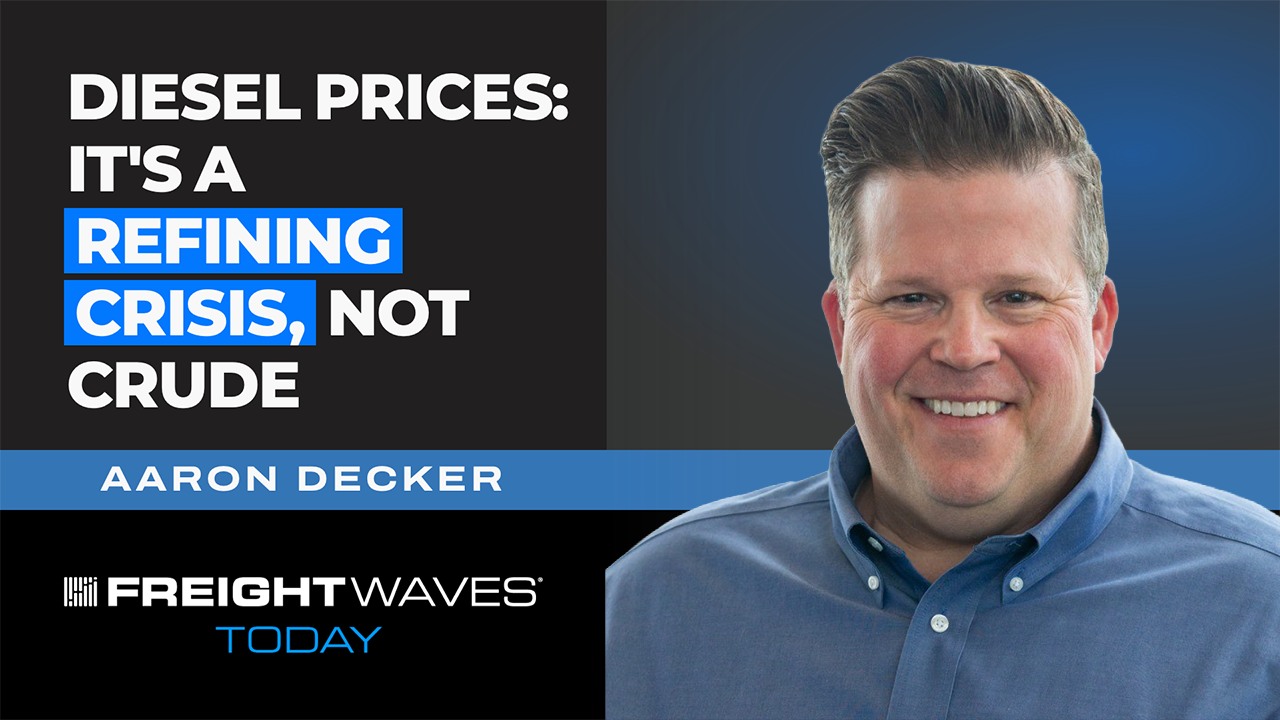
On-road diesel prices reached the high $5.60s this week, but the real driver is refining capacity, not crude oil, according to a FreightWaves interview with Aaron Decker, partner and chief executive officer of Multi-Service Fuel Card. Crude has been hovering in the $80s, while diesel crack spreads have surged above $100 per barrel — far beyond the typical $15–$25 range — signaling a bottleneck in conversion capacity rather than feedstock availability.
A refining crisis, not a crude crisis
Decker framed the current market explicitly: “It’s not necessarily a crude issue or a crude crisis. We’re not in a crude crisis, we’re in a refining crisis.” He described ultra-low distillate inventories falling to levels not seen since the early 2000s, and even the late 1990s, as a signal he called “really troubling.”
“We’re not in a crude crisis, we’re in a refining crisis.” — Aaron Decker, CEO, Multi-Service Fuel Card
The crack spread — the difference between diesel and crude prices — has blown out to more than four times the normal band, pointing squarely at refinery throughput as the limiting factor.
Supply squeeze: drone strikes, exports, and low inventories
Several forces are compounding the supply squeeze, Decker said. Ukrainian drone strikes have taken out Russian refineries that were previously helping backfill global shortfalls. At the same time, U.S. Gulf Coast diesel exports are running elevated as domestic refiners supply shortage-stricken markets overseas, which simultaneously tightens American supply and consumes domestic refining capacity.
Ultra-low distillate inventories have dropped to levels last seen in the early 2000s or late 1990s, according to the interview. Decker said he watches three indicators most closely:
| Indicator | What it tracks |
|---|---|
| Weekly government report | Hormuz tanker traffic |
| Russian refinery runs | Russian processing activity |
| U.S. distillate inventories | Domestic diesel and heating fuel stocks |
The first major fuel-price shock traced to March 2022, when the Russia-Ukraine conflict erupted, Decker noted, and geopolitical unrest continues to keep crack spreads elevated. Hurricane season adds another wildcard: El Niño activity could threaten Gulf Coast refining infrastructure in Q3 and Q4, potentially compounding an already tight market.
Carriers: surcharges, fraud, and the retail-price gap
For carriers, brokers, and shippers, the fuel outlook is critical heading into Q3 and Q4. Decker said fleets that take a “set-it-and-forget-it” approach to fuel programs are leaving money on the table. When prices spike, fraud also surges, making adherence to fraud-protection protocols critical. He urged fleet managers to pull invoices and contact their fuel account managers to uncover savings.
Asked what share of carriers are still paying full retail diesel prices, Decker estimated less than 10% — consistent with a figure of roughly 2% cited by a major fuel stop operator during the interview. That suggests fuel surcharges tied to retail benchmarks may not reflect what most fleets actually pay.
Outlook: north of $5
Decker does not expect relief anytime soon. “I don’t anticipate this getting better in the very near future. I anticipate, and I think the EIA agrees with that, they adjusted their forecast from where they were at the beginning of the year to how things stand now. And I would imagine we’re north of $5 for the foreseeable future.”
That forecast aligns with the refining-crisis thesis: with distillate inventories at generational lows, Gulf Coast exports elevated, and Russian refining capacity degraded by drone strikes, the market remains exposed to any additional supply shock. Decker’s Multi-Service Fuel Card, founded in 1978 and credited as the first fuel card to offer real-time transaction authorization for over-the-road trucking, was acquired earlier this year by Decker and two partners in a deal announced in May. Decker, who has been associated with the business since 2012, celebrated his 14th year of involvement earlier this month.
Sources: