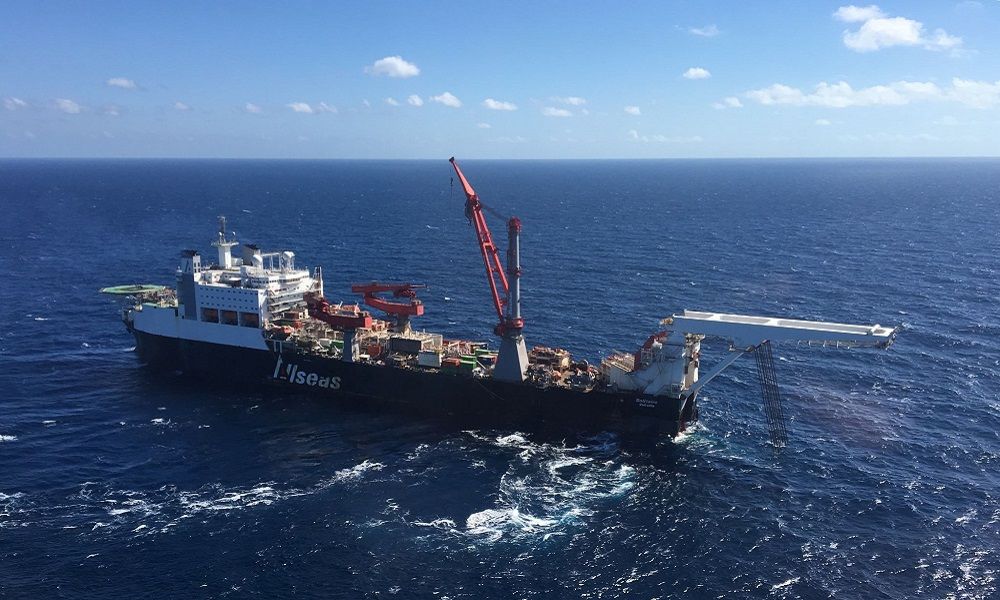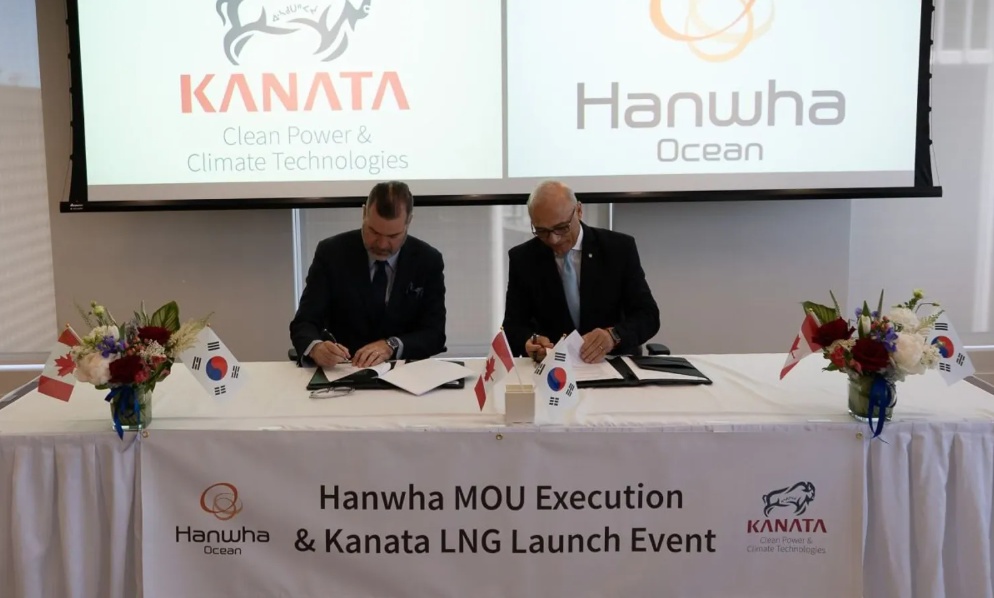
South Korea’s Hanwha Ocean has signed a non-binding memorandum of understanding with Kanata Clean Power & Climate Technologies to explore cooperation on the proposed Kanata FLNG project in Prince Rupert, British Columbia, according to Splash247. The project is planned to have a capacity of up to 12 million tonnes per year, with Kanata estimating total capital expenditure at about $15.7 billion, subject to final engineering, commercial terms, and regulatory approvals.
Project Overview
The Kanata FLNG project is being developed as a modular, marine-based liquefaction facility near Prince Rupert, described by Kanata as North America’s closest Pacific port to Northeast Asia. The floating LNG export project is intended to provide scalable export capacity using modular construction and floating infrastructure.
| Parameter | Detail |
|---|---|
| Project Name | Kanata FLNG |
| Location | Prince Rupert, British Columbia, Canada |
| Capacity | Up to 12 million tonnes per year |
| Estimated Capex | ~$15.7 billion |
| Status | Non-binding MoU (no FID) |
| Developers | Kanata Clean Power & Climate Technologies, Hanwha Ocean |
Cooperation Scope
Under the MoU, the two companies will explore cooperation in several areas:
- Engineering and construction of floating LNG production and related facilities
- Operations and maintenance throughout the project life
- Strategic equity participation
- Long-term LNG purchase arrangements
- Midstream solutions, including LNG carriers and bunkering vessels
Company Statements
Philippe Levy, president of Hanwha Ocean’s energy plant unit, said floating LNG could offer a “flexible and scalable pathway” for new export projects where the technical, commercial, environmental and regulatory conditions are aligned. He stated: “This MoU is an important first step. Significant work remains before any final investment or project execution decision can be made.”
Robert Delamar, CEO of Kanata Clean Power & Climate Technologies, said: “Hanwha brings globally recognised capabilities in floating infrastructure, shipbuilding and energy systems, making it an outstanding collaborator as we advance the project.”
First Nations Participation
Kanata has also offered participating First Nations the opportunity to acquire up to a 50% ownership interest in the project, subject to negotiations, financing arrangements, and applicable approvals.
Next Steps
The MoU is non-binding and does not create any legal obligation for either party to proceed with a definitive transaction. Any future commitments on engineering, investment, operations, or LNG offtake will depend on due diligence, binding agreements, board approvals, and other customary conditions. The project remains subject to significant work before any final investment or project execution decision can be made, according to Levy.
The Kanata FLNG project, if developed, would add substantial LNG export capacity from Canada’s Pacific coast, targeting demand in Northeast Asia. However, at this early stage, no binding commitments have been made. For commodity traders and analysts, the MoU signals potential future supply growth from a new region, but near-term market impact is negligible until FID is taken.
Sources: