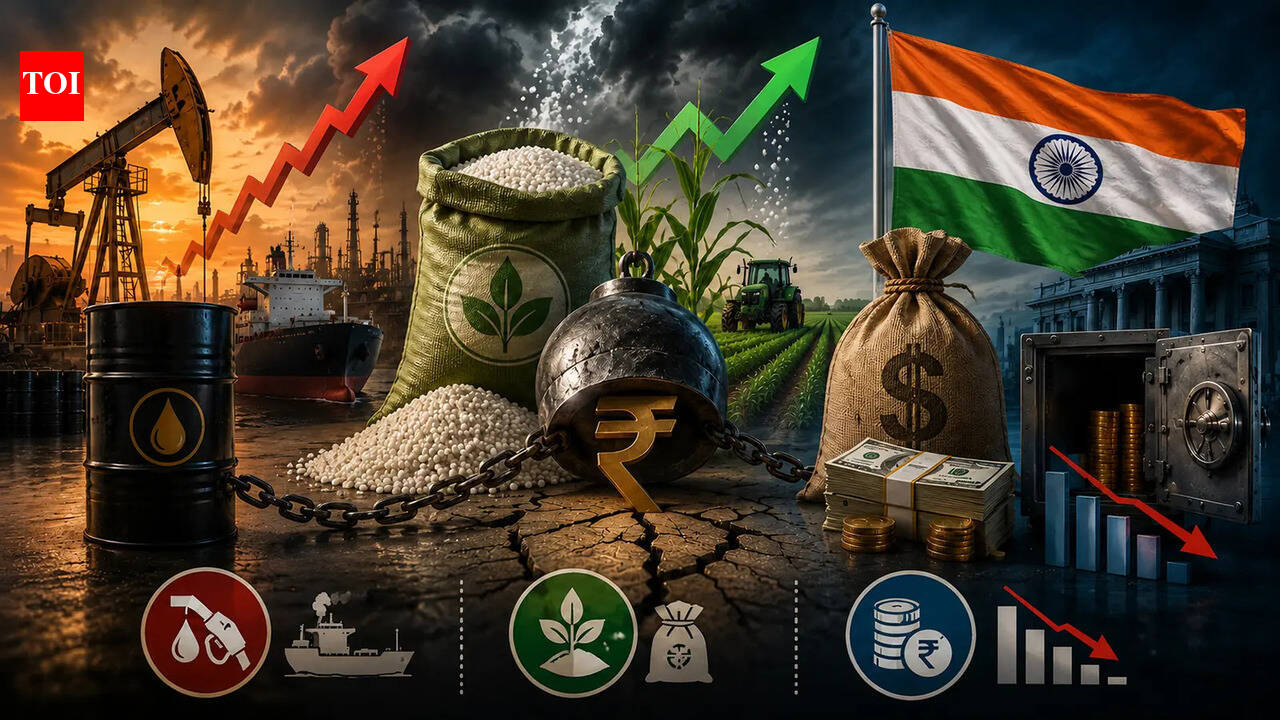
India's economy is confronting a trifecta of external pressures — fuel, fertilisers, and foreign exchange (forex) — as the US-Iran war disrupts global supply chains. Finance Minister Nirmala Sitharaman recently urged the nation to focus on these '3Fs', underlining that Prime Minister Narendra Modi's appeal to conserve foreign exchange was 'very important' amid the Middle East conflict, according to a Business Today report. The crisis, triggered by the closure of the Strait of Hormuz, has sent crude oil prices soaring and constrained supplies of liquefied natural gas (LNG), a key input for fertilisers.
Fuel
India imports more than 85% of its crude oil needs, with a large share coming from Middle Eastern countries. The US-Iran war has already pushed up petrol, diesel, and CNG prices, as well as both domestic and commercial LPG. The Union Budget 2026-27 allocated Rs 12,085 crore for LPG subsidy, but that may prove insufficient. The government had already compensated oil marketing companies (OMCs) with around Rs 26,000 crore for the previous year, and OMCs are currently losing about Rs 700 on every domestic LPG cylinder sold, according to the report. Earlier cuts in excise duty on petrol and diesel have reduced government revenues by more than Rs 1 lakh crore annually.
DK Srivastava, Chief Policy Advisor at EY India, warned: 'Even when the crisis is resolved, supply and price normalization may take two to three quarters at a minimum. Thus, the whole of 2026-27 is likely to be affected by this crisis. India’s dependence on imported crude is close to 90% and therefore, crude oil supply and price disruptions constitute a major vulnerability for the Indian economy. Since available crude is to be imported at higher prices, there is a pressure on forex reserves.'
Fertilisers
Fertilisers are the 'fuel' for India's agricultural sector, but the country relies heavily on imports. According to the Business Today report, of the 40 million tonnes of urea consumed annually, around 8–10 million tonnes are imported. Imports account for roughly 60% of domestic DAP demand, while potash requirements are met entirely through overseas purchases. The Middle East supplies about 50% of India's DAP and urea imports. Saudi Arabia is the largest DAP supplier, and Oman is the biggest urea supplier. LNG, a critical input for fertiliser production, is also sourced from the Middle East. The supply constraints via the Strait of Hormuz come just ahead of the monsoon season, heightening the risk to agricultural output.
| Fertiliser | Domestic Consumption | Import Dependence | Key Source Region |
|---|---|---|---|
| Urea | 40 million tonnes/year | 8–10 million tonnes (20–25%) | Middle East (~50% of urea imports) |
| DAP | — | ~60% of domestic demand | Saudi Arabia (largest supplier) |
| Potash | — | 100% | Not specified |
Forex
The combination of higher crude oil and fertiliser import bills directly pressures India's foreign exchange reserves. Sitharaman stressed that conserving forex is critical. With import costs rising and revenues from excise cuts reduced, the current account deficit is likely to widen. The entire 2026-27 fiscal year may be affected, as per Srivastava's assessment. Trade executives monitoring India's import patterns should prepare for sustained cost increases on crude, LNG, and key fertilisers, and potential currency volatility.
What to watch: The duration of the Strait of Hormuz closure and any diplomatic resolution between the US and Iran, which will determine when supply normalisation can begin.
Sources: