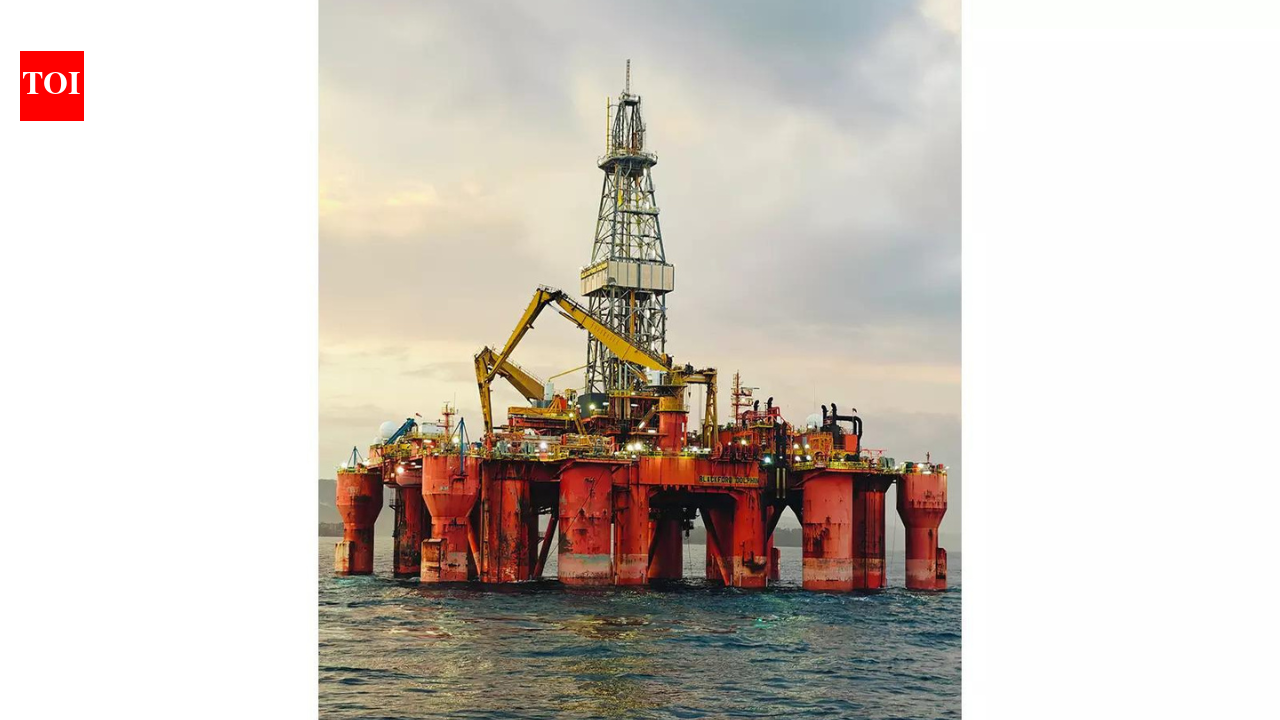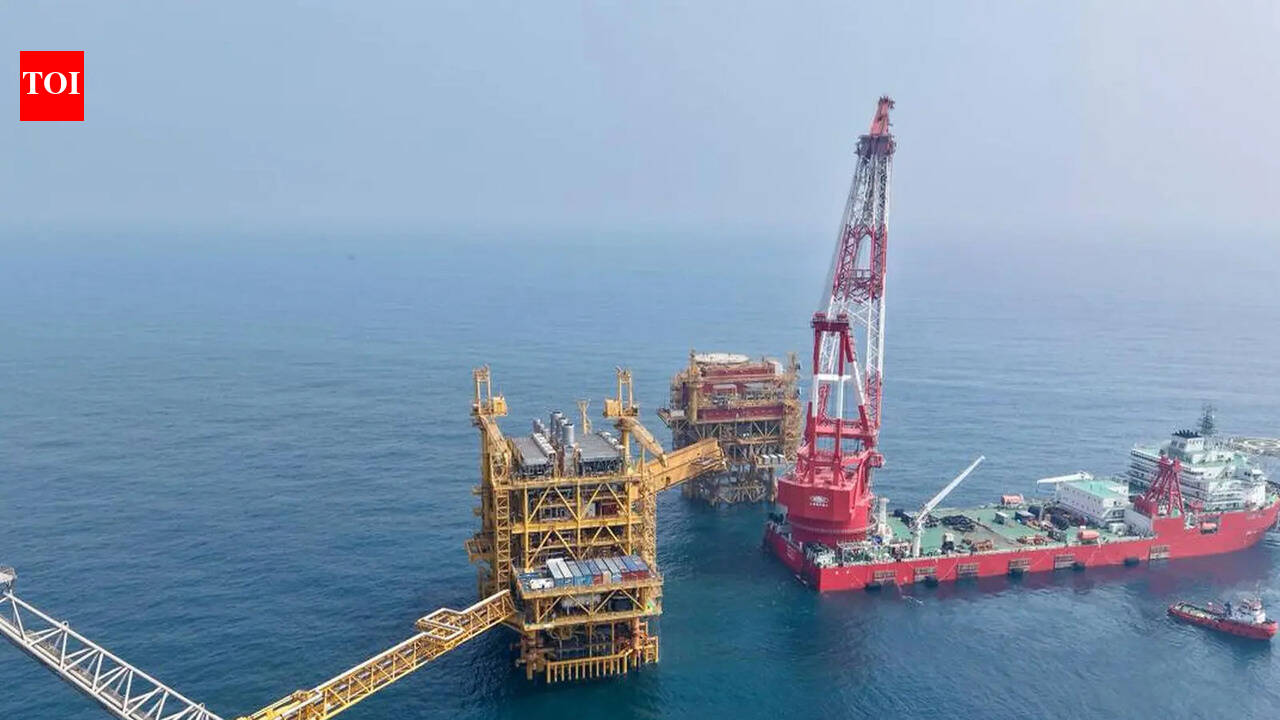
India is turning to its own seabed to hedge against a disruption-prone global crude market. According to Business-Today, the Union Cabinet last week approved the Rs 84,084 crore Samudra Manthan National Offshore Exploration Scheme, under which the Centre will fund 50% of the cost of drilling a deepwater or ultra-deepwater exploration well, or up to Rs 650 crore per well, whichever is lower. Officials said the support will cover 60 exploration wells over the next five years, marking a deliberate policy shift away from India's rising dependence on imported energy.
Why India is drilling deeper offshore
The backdrop is a sharp deterioration in India's energy self-sufficiency. Officials cited by Business-Today said crude oil imports have risen from 77% to 88% of the country's requirement over the past decade. India also imports around half of the natural gas it consumes, used for fertiliser production, power generation, CNG and piped cooking gas. Months of turmoil in the Middle East disrupted global energy supplies, and, according to officials cited by PTI, the recent conflict highlighted the need to strengthen domestic production and reduce reliance on overseas supplies.
Officials said companies have largely focused on producing oil and gas from known discoveries while investing little in searching for new reserves, because unsuccessful exploration wells result in complete financial losses. "They were spending money only on development drilling — producing already established discoveries. Hardly any money went into risk exploration, which is key to finding new resources," an official said. By absorbing part of the exploration cost, the government hopes to attract global energy companies to India's offshore basins.
"This perhaps is the first time that any government in the world is funding risk exploration from the budget," an official said.
How the scheme works
The benefit will be available to companies holding blocks awarded under previous Open Acreage Licensing Programme (OALP) rounds as well as those securing acreage in the ongoing bidding round. Eligible companies can claim government support of up to Rs 650 crore for each qualifying exploration well, with the risk-sharing design intended to make deepwater and ultra-deepwater projects financially viable.
Experts quoted in the report, including Prashant Vashisht, senior vice president, IC, note the scheme's structural significance, though the full commentary was not available in the source. Beyond drilling support, the plan includes a Common Hub Infrastructure (CHI) component to develop shared pipelines and processing facilities, so discoveries made by different companies can be commercialised using common assets rather than separate infrastructure for every project.
Allocation breakdown
The Rs 84,084 crore outlay is dominated by exploration spending, with dedicated buckets for seismic mapping, shared infrastructure and manufacturing support:
| Component | Allocation (Rs crore) | Purpose |
|---|---|---|
| Deepwater & ultra-deepwater drilling | 43,200 | Funding ~Rs 650 crore for each of 60 planned exploration wells till 2031 |
| Offshore seismic & geological surveys | 28,534 | Identifying prospective drilling locations |
| Common infrastructure (incl. subsea pipelines, onshore receiving & processing facilities) | 10,000 | Shared assets for multiple operators |
| Oil & gas manufacturing and services zones | 2,000 | Developing local supply chains |
Officials said the Common Hub Infrastructure approach could lower development costs, improve project economics, optimise marine engineering and offshore resources, make hydrocarbon evacuation more efficient, simplify offshore logistics, speed up commercialisation of smaller discoveries and improve the viability of deepwater and ultra-deepwater projects.
What it means for crude and gas supply
For commodity traders and procurement teams tracking Indian demand, the scheme signals that New Delhi intends to moderate its structural reliance on seaborne crude imports — currently at 88% of consumption — and on imported natural gas, half of which comes from overseas. While the programme will not replace near-term import volumes, it redirects capital into frontier exploration in India's offshore basins, a segment companies previously avoided because of high costs and uncertain returns.
Over the five-year window, the government will also use Rs 28,534 crore for seismic and geological surveys to map prospective drilling locations, and Rs 10,000 crore for shared subsea pipelines and onshore processing facilities. If the 60 planned wells yield commercial discoveries, India's offshore production profile could shift from development-only drilling to new-reserve exploration — the key to reducing import exposure over the longer term, according to officials cited by Business-Today.
Sources: