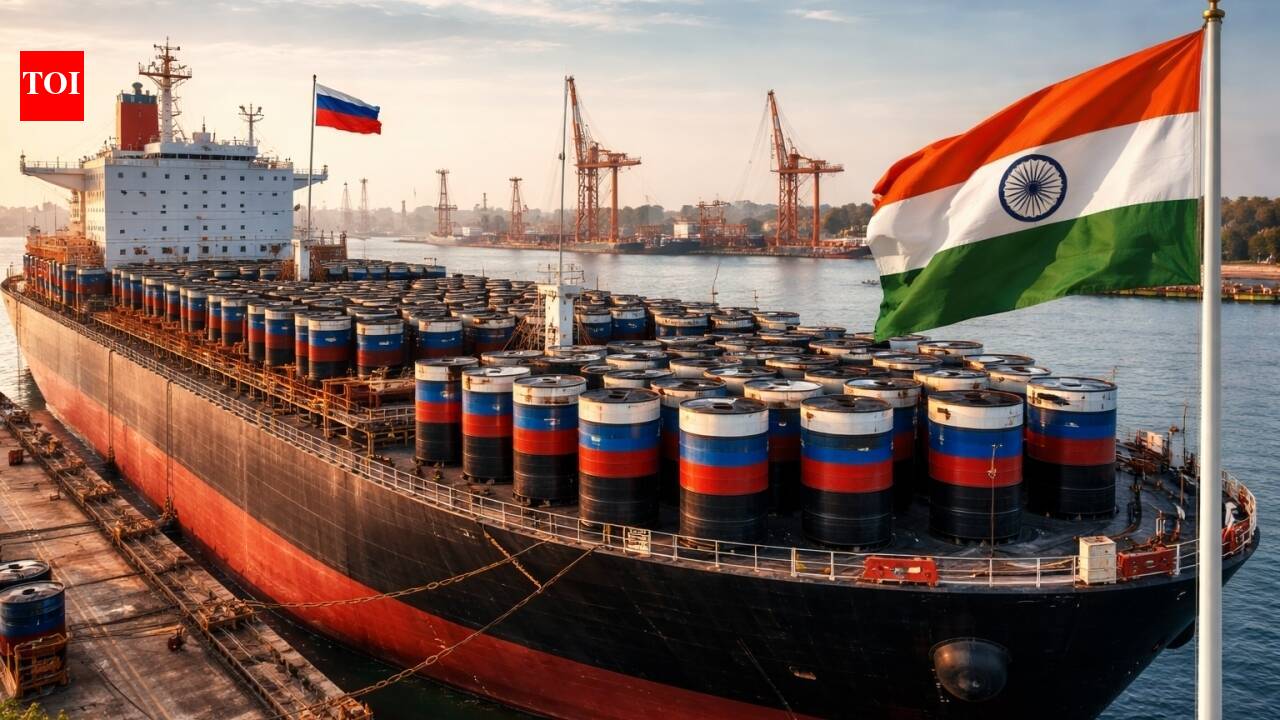
Russia has begun importing gasoline from India for the first time, according to Kpler data quoted in a Bloomberg report, as repeated Ukrainian attacks on its refineries have deepened fuel shortages in the domestic market. The first cargo arrived on August 5, with additional shipments expected to follow, marking a reversal for a country that is traditionally a net exporter of refined fuels.
Why Russia is buying gasoline from India
The imports are driven by a supply crunch caused by Ukraine's intensified campaign targeting Russian refineries. According to EA Analytics, Russia's crude processing averaged 3.6 million barrels a day in July, roughly one-third below the normal seasonal level. Since then, Ukraine has stepped up its strikes, targeting five refineries last week and at least two more this week, the source reported.
In response, Moscow — normally an exporter of refined fuels — has prohibited exports of both gasoline and diesel in order to prioritise domestic demand. The long-distance import from India underscores the severity of the supply crunch Russia is facing, according to the Kpler data cited by Bloomberg.
Nayara Energy and the Vadinar refinery
The supplier is Nayara Energy Ltd, the Indian refiner backed by Russia's largest oil producer Rosneft PJSC. Nayara's 400,000-barrel-per-day refinery at Vadinar on India's west coast has been seeking to diversify its export markets after one of its major buyers, Hindustan Petroleum Corp., recently increased its own fuel production in the region, the report said.
Nayara was sanctioned by the European Union in July last year and has since increasingly depended on so-called dark-fleet tankers and ship-to-ship transfer operations to import crude and export refined products, according to the report. The fuel is being transported through a chain of Russian-linked tankers, involving ship-to-ship transfers off the coast of Egypt.
The shipment trail: Vadinar to Damietta to Russia
Ship-tracking data compiled by Bloomberg details the route. For the first shipment, the Russian-flagged products tanker Cyclone loaded around 42,000 tonnes of gasoline at Vadinar on June 18. The cargo was subsequently transferred to the Oman-flagged tanker Garnet through a ship-to-ship operation at Damietta Port off Egypt's Mediterranean coast on July 6. Garnet later arrived in Russia in early August.
Additional shipments appear to be in the pipeline. According to Kpler, the product tanker Varg loaded nearly 40,000 tonnes of gasoline at Vadinar on July 6 and is believed to have completed a ship-to-ship transfer at Damietta toward the end of July, based on changes in the vessel's draft. Kpler has not confirmed the receiving vessel for that cargo, although it identified Beast as a likely candidate. The tanker was present at Damietta and showed an increase in draft between July 30 and 31. While Beast had declared Morocco's Tangier as its destination, tracking data showed it subsequently sailed past the port and is now heading north in the Atlantic Ocean with the cargo still onboard.
Ship-tracking data also showed that another products tanker, the Cameroon-flagged Photon, departed Vadinar on July 13 before transferring its gasoline cargo to the Russia-flagged Talisman at Damietta during July 28–29.
| Cargo | Loaded at Vadinar | Volume | Transfer at Damietta | Receiving Vessel |
|---|---|---|---|---|
| First shipment | June 18 (Russian-flagged Cyclone) | ~42,000 tonnes | July 6 | Oman-flagged Garnet |
| Second shipment | July 6 (product tanker Varg) | ~40,000 tonnes | End of July | Unconfirmed; Beast likely |
| Third shipment | July 13 (Cameroon-flagged Photon) | Not specified | July 28–29 | Russia-flagged Talisman |
Market implications
"The emergence of Indian barrels is particularly notable," said Sumit Ritolia, lead analyst at Kpler. He said the shipments, alongside continued imports from Belarus and other neighbouring markets, demonstrate "the severity of the current domestic gasoline imbalance, and the extent to which lower refinery runs are reshaping Russia's traditional product trade flows."
Global energy markets continue to be affected by the twin impact of two major geopolitical conflicts, the report noted. While Ukraine has intensified its campaign targeting Russian refineries, tensions between the US and Iran have continued in the Middle East. Together, these disruptions have tightened fuel supplies, prompting Russia to look further afield for gasoline.
The emergence of Indian barrels, according to Kpler, shows how lower refinery runs are reshaping Russia's traditional product trade flows. With more shipments expected and Ukraine continuing to strike refineries, the market will watch for further shifts in Moscow's supply strategy.
Sources: