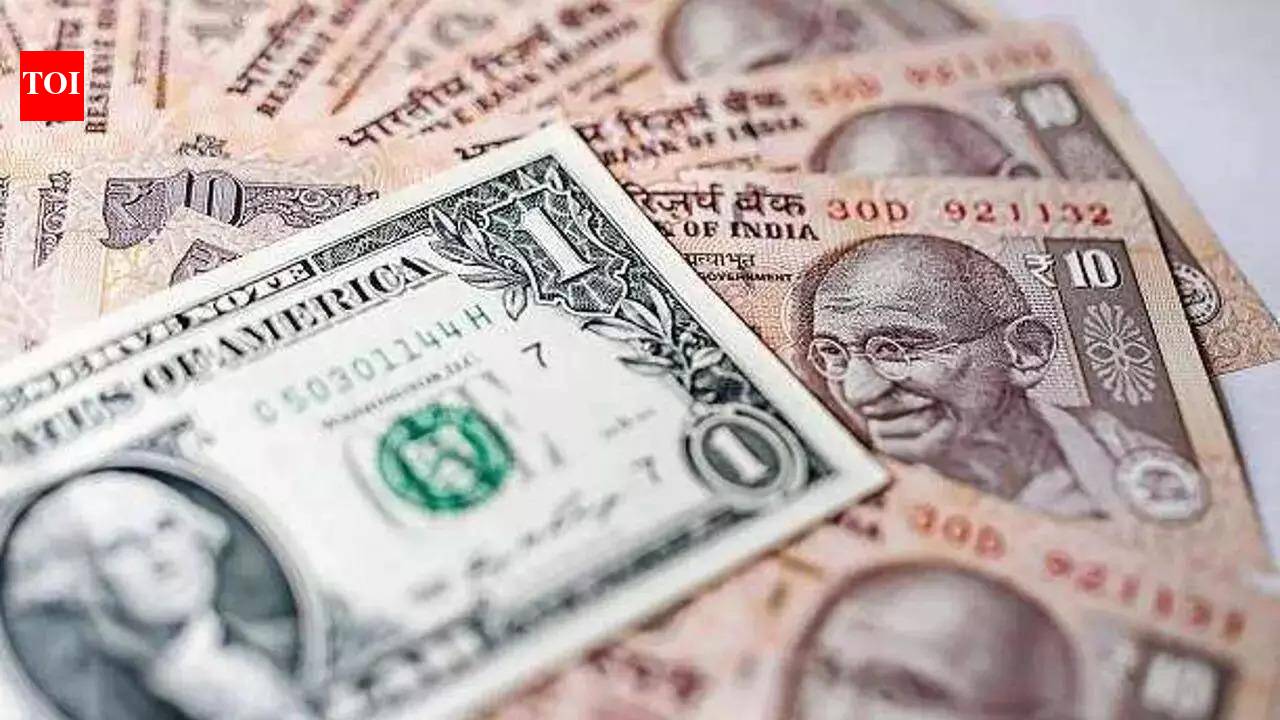
The rupee is falling and your investment portfolio is bleeding red, according to a report by Business Today. India may be a fundamentally strong growth story, but for now your investments may be flashing negative returns. As the impact of the US-Iran conflict rips through an economy dependent on fuel imports, the currency has seen a rapid fall requiring RBI's frequent interventions.
Rupee Weakness and Macroeconomic Impact
A weaker rupee increases the cost of imports, which can increase inflation and impact interest rate policy, according to Business Today. For an economy dependent on fuel imports, the US-Iran conflict has exacerbated currency depreciation, prompting frequent intervention by the RBI. Higher import costs directly affect trade finance costs, as importers face larger rupee outflows and potentially higher hedging expenses.
Portfolio Implications for CFOs and Treasury Directors
Nirav R Karkera, Head of Research at W by Groww, explains that for domestic equities, the effect is not uniform. Export-oriented companies — IT services, pharma and other businesses with dollar revenues — may see some benefit. Import-heavy sectors, companies with dollar costs, or businesses carrying foreign currency debt may come under pressure. A weaker rupee can also make Indian equities less attractive for FPIs because their dollar returns get diluted, and that can add to volatility when global risk appetite is already weak.
For fixed income, the main channel is inflation and interest rates, Karkera says. If rupee weakness feeds into imported inflation through oil, commodities or other inputs, it can limit the RBI’s room to cut rates and make long-duration debt more vulnerable. This raises the cost of capital for trade finance and other corporate borrowing.
| Asset Class | Rupee Weakness Effect |
|---|---|
| Export-oriented equities | Benefit from dollar revenues |
| Import-heavy equities | Pressure from higher costs |
| Fixed income | Vulnerable if RBI cannot cut rates |
| Gold | Boosted by currency depreciation |
| International assets (US stocks) | Automatic currency hedge |
Gold as a Portfolio Hedge
Business Today reports that gold acts as a portfolio insulator in such times. With falling rupee, gold has historically acted as a hedge during periods of currency weakness, inflation and geopolitical uncertainty. When the rupee weakens, domestic gold prices often receive an additional boost from currency movements. Experts advise taking the digital route — ETFs, mutual funds rather than physical gold.
Nirav R Karkera explains that gold tends to be a more direct beneficiary in rupee terms because domestic gold prices reflect both global gold prices and the exchange rate. In the current environment, gold is also being supported by global risk aversion and central-bank diversification. That said, gold should still be treated as a portfolio hedge, not as a return guarantee, Karkera tells TOI.
However, Mukesh Kumawat, Director at Anand Rathi Wealth Limited, strikes a note of caution. During these uncertain times, gold has traditionally acted as a safe asset, however, with speculative activity, it has turned into a volatile asset in recent times. Hence, while gold is an important portfolio diversifier, it should not be treated as the primary wealth grower.
International Diversification: US Stocks and Global Assets
A falling rupee automatically boosts the value of overseas investments when converted back into rupees. Investors can look to allocate a portion of their equity exposure to international funds, ETFs or global stocks. For example, US-focused funds can provide a natural currency hedge, say experts.
Rohit Shah, Financial Planner, tells TOI that for most long‑term investors, 15–25% in international assets is a reasonable range. The exact number should depend on goals (like overseas education). This approach directly addresses currency risk for treasuries managing cross-border exposures.
Strategic Recommendations for Trade Finance Professionals
Experts believe that one of the biggest mistakes investors make is taking drastic portfolio decisions after the rupee has already fallen. Instead of panic driven reactions, keep calm, stay invested for the long-term. Continue SIPs, Don't Chase Currency Moves. For CFOs and treasury directors, the practical implication is to lock in hedging strategies while the rupee is weak, and consider gold and international equities as a natural hedge against further depreciation. The RBI's limited room to cut rates due to imported inflation means trade finance costs may stay elevated.
Sources: