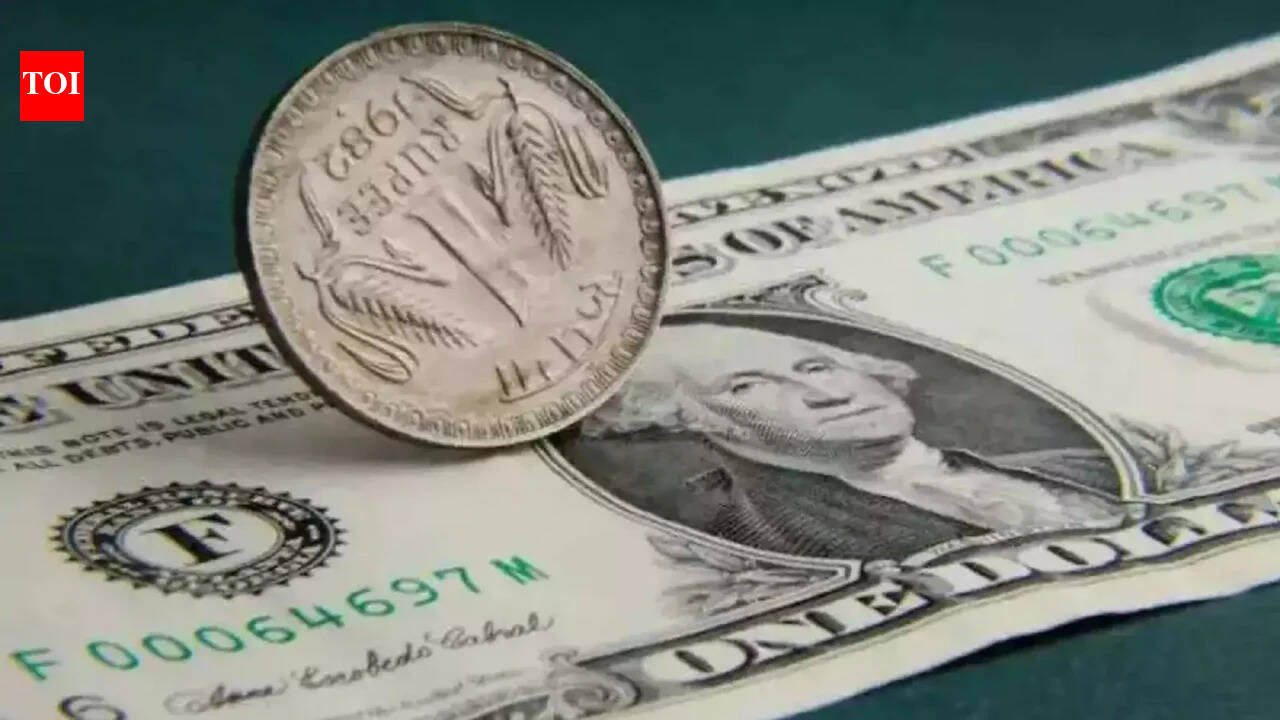
The Indian rupee ended 2 paise lower at 94.60 against the US dollar on Tuesday, snapping a two-session winning streak, according to Business Today. The currency opened at 94.69 at the interbank foreign exchange market and fluctuated between 94.48 and 94.71 before settling at its closing level, compared with the previous close of 94.58.
Rupee Movement and Market Context
The rupee had strengthened significantly in the prior two sessions—60 paise on Monday and 67 paise on Friday—before Tuesday's mild decline. Forex traders attributed the currency's resilience to de-escalation of tensions in West Asia and the expected reopening of the Strait of Hormuz, a key global energy shipping route. However, foreign capital outflows from Indian equities kept the rupee under pressure, pushing it slightly lower.
| Session | Rupee Change | Close (vs USD) |
|---|---|---|
| Tuesday | -2 paise | 94.60 |
| Monday | +60 paise | 94.58 |
| Friday | +67 paise | (not specified) |
Meanwhile, domestic equity benchmarks rallied: the BSE Sensex rose 544.15 points to 76,808.48, and the NSE Nifty gained 135.25 points to 23,989.15. However, foreign institutional investors (FIIs) remained net sellers, offloading equities worth Rs 749.18 crore during the session, according to exchange data.
Key Drivers
Lower crude oil prices provided support. Brent crude, the global oil benchmark, traded 1.68% lower at $81.77 per barrel in futures trade. The decline followed a US-Iran peace framework agreement expected to lead to the reopening of the Strait of Hormuz, through which a significant share of global oil and LNG exports passes. Amit Pabari, managing director of CR Forex Advisors, said: "For India, which imports nearly 90% of its oil requirements, lower crude prices are often like a favourable wind behind a ship supporting the rupee," as quoted by PTI.
Additionally, the dollar index, which measures the US currency against six major peers, was marginally lower at 99.61, offering some relief to emerging-market currencies.
US President Donald Trump said Vice President JD Vance will lead the American delegation for the formal signing of the peace deal with Iran in Switzerland on Friday, a development that continues to influence global currency and commodity markets.
Expert Outlook
Market analysts remain constructive on the rupee's near-term trajectory. Anuj Choudhary, research analyst at Mirae Asset ShareKhan, said: "USD-INR spot price is expected to trade in a range of 94.10 to 94.90," as cited by PTI.
Dilip Parmar, research analyst at HDFC Securities, noted: "In the near term, USD-INR is expected to maintain a downward bias, with spot levels likely to gravitate towards 94.10. On the upside, 95.20 is expected to act as a near-term resistance, capping any intermittent corrective moves."
Trade and Business Implications
For CFOs and treasury directors of Indian companies, the rupee's stability around the 94.10-94.90 range—supported by lower oil prices—reduces near-term hedging urgency for importers, especially those exposed to crude oil costs. However, sustained FII outflows (Rs 749.18 crore in a single session) signal lingering foreign investor caution, which could weigh on the rupee if the trend persists. Export-oriented firms, particularly in IT and pharmaceuticals, may see a slight competitive advantage if the rupee remains at these levels versus a weaker dollar. The reopening of the Strait of Hormuz, if confirmed, would lower trade finance costs linked to energy logistics, benefiting import-reliant sectors. Treasury professionals should monitor the 94.10 support—a break below could strengthen the rupee further, while a move above 95.20 would signal renewed depreciation pressure.
Sources: