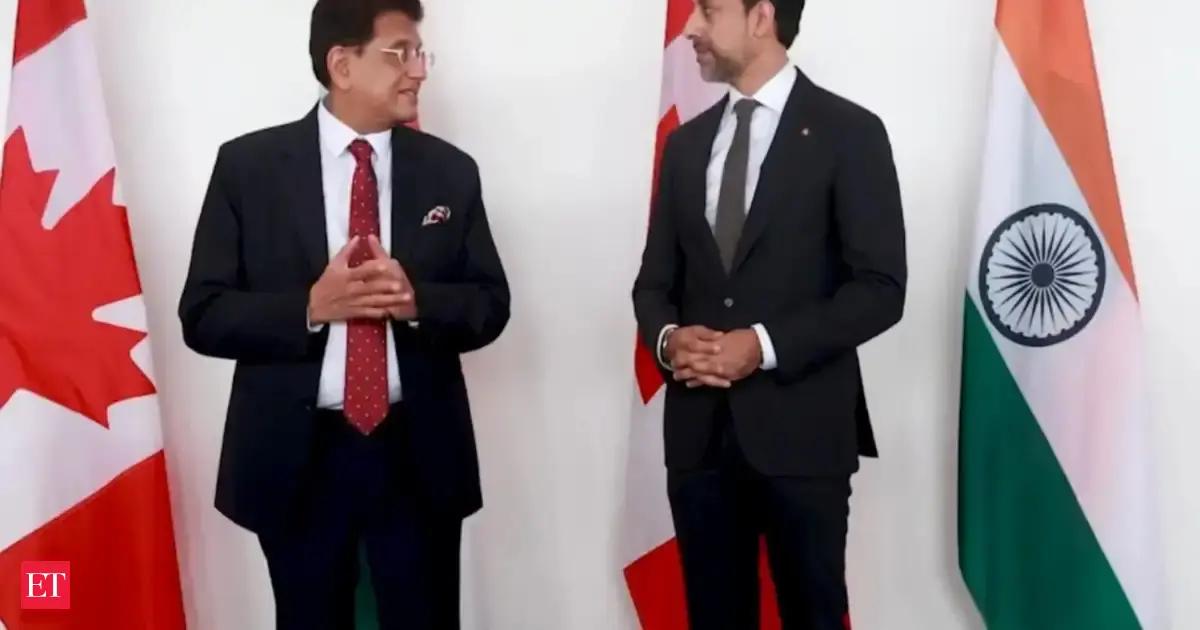
India and Canada are accelerating efforts to finalize a Comprehensive Economic Partnership Agreement (CEPA) by November 2023. This ambitious timeline was confirmed by Piyush Goyal, India's Minister of Commerce and Industry, during his visit to Canada. The agreement aims to significantly enhance bilateral trade, targeting a growth from $17 billion to $50 billion by 2030.
Negotiation Progress
The third round of negotiations is underway, with discussions focusing on reducing tariffs and non-tariff barriers. Mark Carney, a key figure in the negotiations, has expedited the timeline, aiming for a conclusion by November.
"Our Prime Minister has tasked us not only with completing the free trade agreement with a comprehensive outlook before the end of this year or earlier," said Goyal.
Economic Impact
The CEPA is expected to open up numerous investment opportunities across various sectors, including energy, mining, automotive goods, pharmaceuticals, telecom, AI, leather, and textiles. The agreement will also enhance cooperation in agriculture, focusing on food security and sustainability.
Bilateral Trade Goals
Both countries are committed to tripling their trade volume by 2030. A Team Canada business delegation is scheduled to visit India later this year to further strengthen economic ties.
| Trade Metric | Current Value | Target Value by 2030 |
|---|---|---|
| Bilateral Trade | $17 billion | $50 billion |
Strategic Importance
The CEPA is seen as a strategic move to bolster economic ties between India and Canada, with both nations looking to leverage each other's strengths in technology and innovation. Piyush Goyal highlighted the potential benefits of introducing India's UPI technology to Canada, which could reduce transaction costs significantly.
The agreement's successful conclusion will mark a significant milestone in India-Canada relations, fostering long-term economic growth and collaboration.