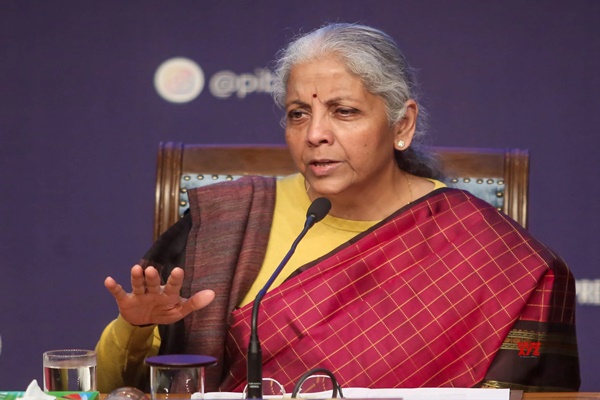
Finance Minister Nirmala Sitharaman today said that India is building a globally competitive toy manufacturing ecosystem through higher quality standards, policy support, skilling and improved market access, according to News on AIR.
Addressing an event organised by the Toy Association of India in New Delhi, Sitharaman outlined the progress of India's toy sector under the government's quality-focused and self-reliant manufacturing push.
Export growth and import decline
India's toy exports reached $186 million in 2025-26, with Indian toys now reaching 153 countries, Sitharaman stated. Meanwhile, toy imports have declined by 71% since 2019, reflecting the success of quality-focused policies.
| Metric | Value | Period |
|---|---|---|
| Toy exports | $186 million | 2025-26 |
| Export destinations | 153 countries | 2025-26 |
| Import decline | 71% | Since 2019 |
Policy support ecosystem
Sitharaman said that agreements with the UAE and Australia, along with schemes such as PM MUDRA and Remission of Duties and Taxes on Exported Products (RoDTEP) , are enabling Indian toy manufacturers to scale up production, boost exports and compete in global markets.
These measures form part of a broader strategy including higher quality standards, skilling initiatives, and improved market access, which the Finance Minister credited for the sector's transformation.
Market projections
While India's toy market is projected to reach $5 billion by 2034, Sitharaman emphasised that the country's aspiration should be to secure a much larger share of the expanding global toy market. The statement signals continued policy focus on boosting export competitiveness in the sector.
For trade policy analysts and import/export professionals, the 71% reduction in imports indicates successful import substitution, while the expansion to 153 export markets demonstrates growing global reach. The combination of bilateral trade pacts and domestic support schemes offers a template for other manufacturing sectors seeking to enhance export competitiveness.
Sources: