iGEN
Visit IGEN World Explore IGEN Expo
EXPLORE UPGRADE PLANS
BREAKING
New Senate bill targets 'chameleon carriers' that reopen to escape penalties Werner Enterprises Posts Highest Revenue Per Truck Growth in One-Way Segment in a Decade CMA CGM and Stonepeak Launch United Ports LLC in $2.4 Billion Terminal Joint Venture UPS shift away from Amazon shows bigger payoff Lanesurf: 62% of Loads Get Vetted Carrier Offers Before Brokers Arrive India-China Border Trade Via Lipulekh Resumes Aug 1; China Permits 20 Traders Geopolitics Drives CMA CGM Q2 Profit Surge of 42% as Volumes and Rates Climb Benchmark Diesel Price Rises Third Week as Futures Plunge; Spread Hits Record Indian Government Limits Sugar Dealers to 400 Tonnes Stock Until November to Curb Hoarding Tenants signing longer leases for larger warehouses as 3PLs lock in capacity New Senate bill targets 'chameleon carriers' that reopen to escape penalties Werner Enterprises Posts Highest Revenue Per Truck Growth in One-Way Segment in a Decade CMA CGM and Stonepeak Launch United Ports LLC in $2.4 Billion Terminal Joint Venture UPS shift away from Amazon shows bigger payoff Lanesurf: 62% of Loads Get Vetted Carrier Offers Before Brokers Arrive India-China Border Trade Via Lipulekh Resumes Aug 1; China Permits 20 Traders Geopolitics Drives CMA CGM Q2 Profit Surge of 42% as Volumes and Rates Climb Benchmark Diesel Price Rises Third Week as Futures Plunge; Spread Hits Record Indian Government Limits Sugar Dealers to 400 Tonnes Stock Until November to Curb Hoarding Tenants signing longer leases for larger warehouses as 3PLs lock in capacity
Home ›› Intl Trade ›› Import Export ›› Export Docs ›› Oil, LNG, Fertilisers and Diamonds at Risk from Iran's Wider Blockade Threat Beyond Strait of Hormuz

Oil, LNG, Fertilisers and Diamonds at Risk from Iran's Wider Blockade Threat Beyond Strait of Hormuz

Iran's Islamic Revolutionary Guard Corps (IRGC) has warned it could expand efforts to disrupt regional trade beyond the Strait of Hormuz, threatening oil, LNG, fertilisers and diamond supply chains. The Strait carries nearly 20 million barrels per day of crude and petroleum products, and over 90% of Qatar and UAE's LNG exports. Diamonds routed through India and UAE for cutting and polishing face disruption, along with petrochemicals and food shipments.

iG
iGEN Editorial
July 15, 2026
Oil, LNG, Fertilisers and Diamonds at Risk from Iran's Wider Blockade Threat Beyond Strait of Hormuz

Just as global energy supplies were beginning to stabilise after nearly four months of disruption, Iran has issued a fresh warning over the Strait of Hormuz, according to a Business-Today report. This time, however, the threat could extend far beyond the waterway. Iran’s Islamic Revolutionary Guard Corps (IRGC) said it could close “all other export corridors that benefit the US and its allies”, according to Iranian media. The statement came after Iran closed the Strait of Hormuz and the US reimposed a naval blockade on Iranian ports.

Strait of Hormuz: The Energy Chokepoint

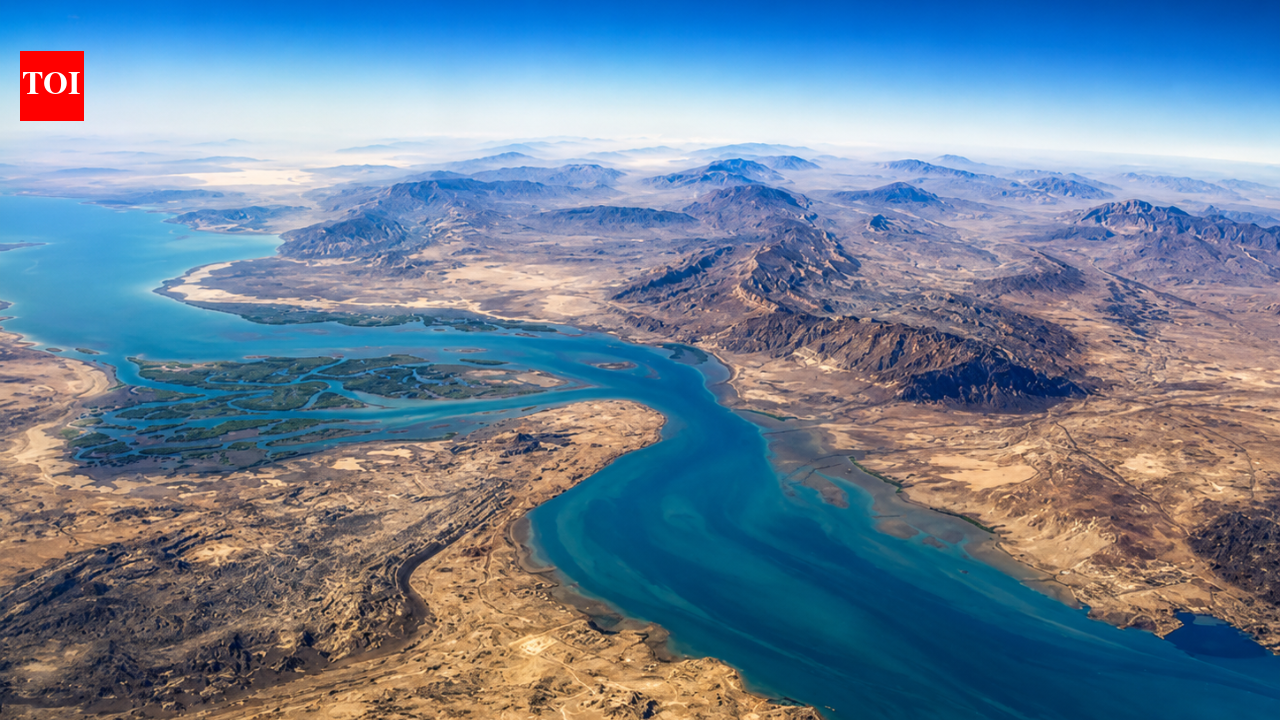
The Strait of Hormuz is the world's most important energy chokepoint, separating Iran from the Arabian Peninsula. It connects the Persian Gulf with the Gulf of Oman and the Arabian Sea and carries nearly 20 million barrels a day (mb/d) of crude oil and petroleum products, around a quarter of global seaborne oil trade, according to Business-Today. In 2025 alone, almost 15 mb/d of crude oil, nearly 34% of global crude trade, passed through the Strait. Including refined products, total oil exports reached almost 20 mb/d.

Country Crude oil exports via Strait (mb/d, 2025)
Saudi Arabia 6.23
Iraq 3.63
UAE 3.24
Iran 2.41
Kuwait 2.37
Qatar 1.43
Bahrain 0.21

Source: Business-Today. The route is the main export outlet for Saudi Arabia, UAE, Iraq, Kuwait, Qatar, Bahrain and Iran. While Saudi Arabia and the UAE have limited pipeline bypass capacity, Iran, Iraq, Kuwait, Qatar and Bahrain rely on it for the overwhelming majority of their exports. The IRGC said on Wednesday that the Strait would remain closed until what it described as “the end of America's evils”.

LNG in the Crosshairs

The Strait is just as critical for liquefied natural gas (LNG) exports. Around 93% of Qatar's LNG exports and 96% of the UAE's LNG exports pass through the Strait, together accounting for almost one-fifth of global LNG trade, according to Business-Today. Qatar exported more than 112 billion cubic metres (bcm) of LNG in 2025, while the UAE exported around 7 bcm. Except for supplies sent to Kuwait, virtually every LNG cargo from both countries uses the Strait.

Unlike crude oil, there are currently no practical alternative routes. Qatar's Dolphin pipeline transported almost 20.5 bcm of gas to the UAE and Oman in 2025, but it has little spare capacity. Oman's LNG export terminals are also operating close to full utilisation. A prolonged disruption could remove more than 300 million cubic metres of LNG a day from global markets, more than twice the average volume transported through the Nord Stream pipeline in 2021. Replacing these supplies quickly would be difficult.

Beyond Energy: Petrochemicals, Fertilisers, and Diamonds

The Middle East exports large volumes of petrochemicals, industrial chemicals and fertilisers through the region's shipping routes, including ethylene, polymers, industrial chemical feedstocks and urea-based fertilisers supplied to the United States, European Union and India, according to Business-Today. The UAE imported $57.6 billion in rough diamonds, polished diamonds, and diamond jewellery in 2024; the US imported $27.3 billion. India's gem and jewellery exports were $32.3 billion in 2024, of which diamond jewellery accounted for $15.86 billion.

Diamonds from Botswana, Namibia, South Africa and Russia are cut and polished in India and the UAE before reaching Western markets. Iran had previously targeted vessels en route from India to Antwerp, Belgium. India's gem and jewellery industry is largely reliant on diamond imports from the UAE, which sources stones from non-Iranian sources.

Impact on India and Other Markets

India's olive oil imports from Spain and Italy are at risk of delays due to increased journey times, according to the report. Rice exports from India to the Middle East could face delays, impacting household budgets in the region. India's Engineering Exports Promotion Council (EEPC) expects production disruptions in Bangladesh for engineering goods due to Houthi attacks. Iran used to send around $550 million worth of pistachios to India annually, but trade stopped after sanctions, and India shifted to the US and UAE.

A wider blockade by Iran would affect multiple sectors simultaneously, with no quick substitutes available for many of the region's exports.


Sources: Business-Today

Keep Reading

Recommended Stories

Washington and Tehran Issue Conflicting Messages on Strait of Hormuz Transits Trade

Washington and Tehran Issue Conflicting Messages on Strait of Hormuz Transits

The United States and Iran issued contradictory statements over the weekend on the status of the Strait of Hormuz. US Central Command reported 55 merchant ships transited on Saturday, while Iran maintained the waterway was closed. Vessel-tracking data from Kpler showed only five ships passed on Sunday, down from 26 a day earlier, deepening confusion for shippers.

June 23, 2026
Iran Peace Deal to Reopen Strait of Hormuz: Oil, Jet Fuel, and Energy Prices Begin to Stabilize Trade

Iran Peace Deal to Reopen Strait of Hormuz: Oil, Jet Fuel, and Energy Prices Begin to Stabilize

The Iran-US peace deal signed on 18 June 2026 is set to reopen the Strait of Hormuz, lowering energy prices after months of war-driven inflation. UK petrol remains at 154.72p/litre, diesel 174.30p, while jet fuel prices have halved from war peaks but remain above pre-war levels. Deferred nuclear talks create uncertainty.

June 20, 2026
Iran Primes Houthis to Shut Bab el-Mandeb, Risking Global Shipping Disruption Logistics

Iran Primes Houthis to Shut Bab el-Mandeb, Risking Global Shipping Disruption

Iran has reportedly asked Yemen's Houthi movement to prepare to close the Bab el-Mandeb Strait if the US attacks Iranian power infrastructure. Missiles and drones have been deployed near the strategic waterway, according to sources. The move threatens to choke a critical chokepoint for global trade, forcing further diversions around Africa and driving up freight costs.

July 17, 2026
US Forces Fire Hellfire Missiles to Disable Iran-Bound Tanker in Arabian Gulf Logistics

US Forces Fire Hellfire Missiles to Disable Iran-Bound Tanker in Arabian Gulf

U.S. forces fired Hellfire missiles to disable the Curacao-flagged tanker M/T Belma attempting to violate a blockade toward Iran's Kharg Island terminal. The vessel ignored multiple warnings and is no longer transiting. The U.S. blockade began July 14 after the ceasefire collapsed. Crude oil futures stabilized at $78 per barrel with reduced Strait of Hormuz traffic.

July 16, 2026