The US and Iran have reached a peace deal to end a four-month war that disrupted global energy supplies, pushed oil prices above $100 per barrel, and brought the Middle East to the brink of a wider regional conflict, according to the Economic Times. The peace agreement is scheduled to be signed on June 19 in Switzerland.
Peace Deal and Geopolitical Context
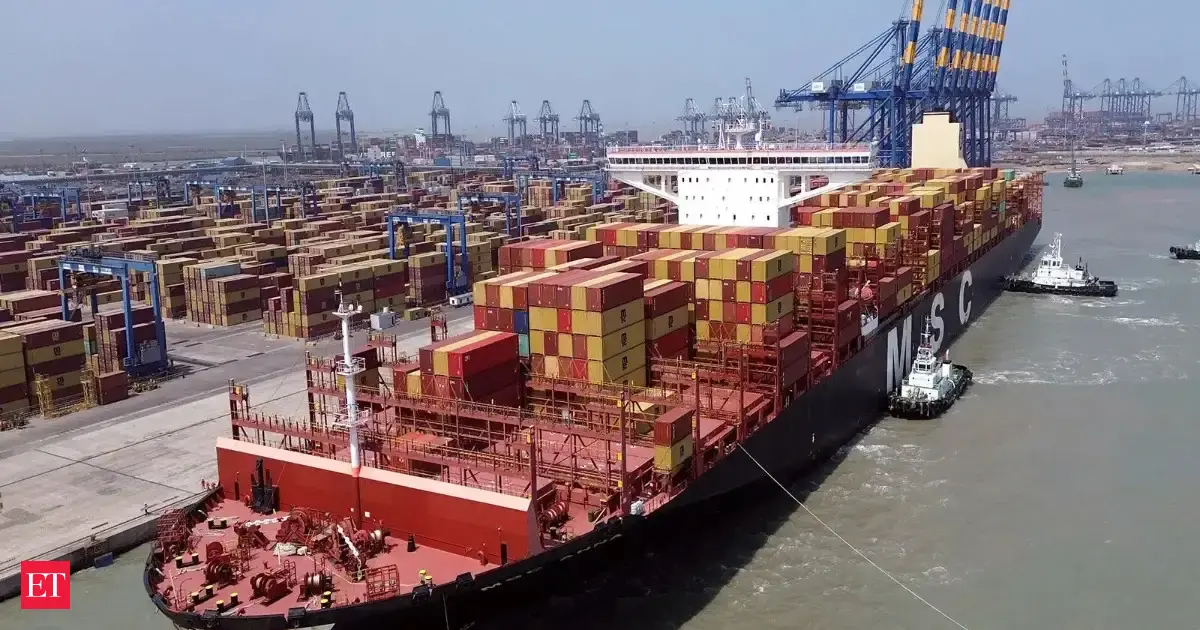
The conflict began on February 28 when the US and Israel jointly launched military operations against Iran over its nuclear programme. The war severely affected India's trade with the region. The Strait of Hormuz closure had led to increased insurance and freight rates, forcing ships to take the longer route via the Cape of Good Hope, which increased delivery times.
Experts cited in the report said reopening the Strait of Hormuz is expected to stabilise energy markets, ease pressure on oil and gas prices, strengthen the rupee, and improve India's growth outlook.
Key Stakeholder Reactions
Sharad Kumar Saraf, Mumbai-based exporter and Founder Chairman of Technocraft Industries India, said the announcement "paves way for the end of uncertainties, economic slow down and unwarranted hardships." He added: "The end of war and hostilities will not only help in quantum jump in India's exports but will throw open a host of new business opportunities. Next 2-3 years will accelerate India's efforts for a Viksit Bharat."
S C Ralhan, President of the Federation of Indian Export Organisations (FIEO), stated that "any easing of geopolitical tensions in the region should help restore normalcy in global energy supplies and moderate prices." He elaborated: "For India, this would reduce pressure on the import bill, normalise exports, support rupee stability, ease inflationary concerns, and create a more conducive environment for trade and economic growth."
Impact on India's Trade
During the war, India's exports suffered significantly. In March, India's exports posted the steepest fall in five months, declining 7.44% to $38.92 billion. Exports to the Middle East or West Asia region fell 57.95% to $3.5 billion in March, while imports from Gulf nations fell 51.64%. Normally, India exports goods worth about $6 billion to this region.
India-GCC Trade Data
Before the conflict, India's trade with the Gulf Cooperation Council (GCC) was growing. The following table summarises the trade data for 2024-25 and 2025-26 as reported:
| Partner | Metric | 2024-25 (or 2024-25 vs 2023-24) | 2025-26 (or change vs previous year) |
|---|---|---|---|
| GCC (aggregate) | Exports | ~$57 billion (growth ~1%) | — |
| GCC (aggregate) | Imports | $121.7 billion (up 15.33% from $105.5B) | — |
| UAE | Exports | — | $37.4 billion (+2%) |
| UAE | Imports | — | $63.9 billion (+0.78%) |
| UAE | Trade Deficit | — | $26.53 billion |
| Saudi Arabia | Exports | — | $110.28 billion (-12.55%) |
| Saudi Arabia | Imports | — | $30.8 billion (+2.22%) |
| Saudi Arabia | Trade Deficit | — | $20.5 billion |
| Qatar | Exports | — | $1.62 billion (-3.7%) |
| Qatar | Imports | — | $12.3 billion (-1.37%) |
| Qatar | Trade Deficit | — | $10.7 billion |
| Oman | Exports | — | $4.02 billion (-1%) |
| Oman | Imports | — | $7.16 billion (+9.43%) |
Note: The Economic Times reported that the UAE was India's third-largest trading partner in 2025-26, and Saudi Arabia was the fifth-largest. The export figure for Saudi Arabia appears unusually high; the source gave exactly $110.28 billion, which may be a typographical error but is reproduced as written.
Outlook
The peace deal is expected to restore normalcy in energy markets and trade routes, benefiting Indian exporters and importers alike. The reopening of the Strait of Hormuz is a critical step toward stabilising shipping costs and transit times, which had risen sharply during the conflict.
Sources: