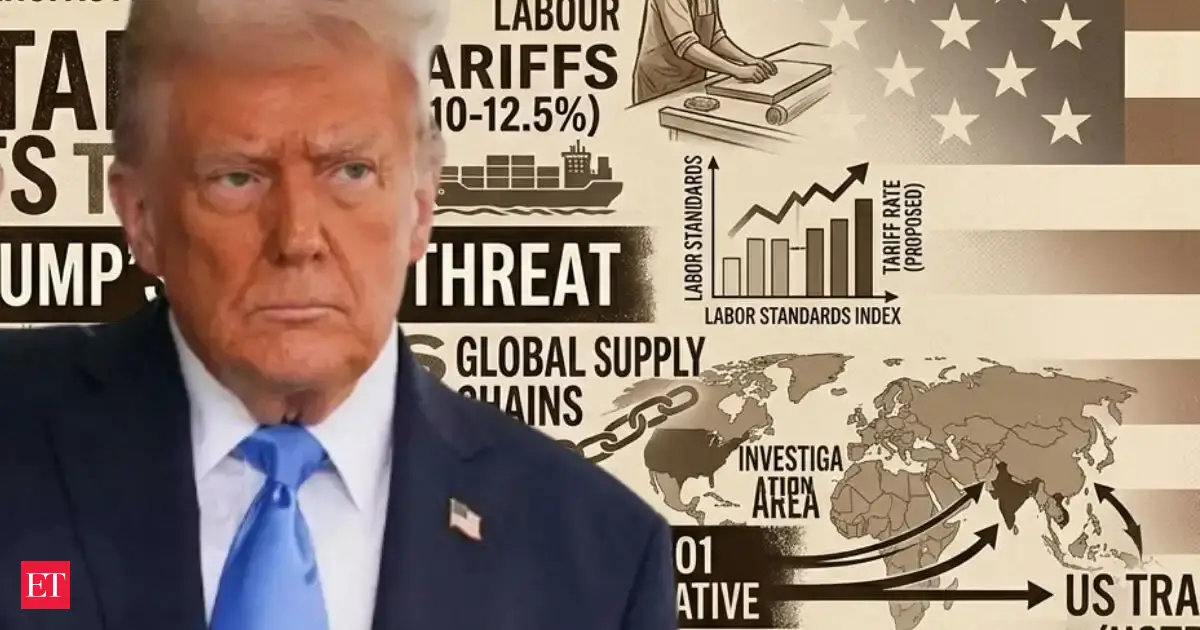
The United States has announced new tariffs ranging from 10% to 12.5% on imports from 60 countries due to concerns over forced labour practices. This move, announced by the US Trade Department, targets countries that have not effectively prohibited or enforced bans on goods produced with forced labour.
Tariff Details
The tariffs are set at 10% for countries like Canada, the EU, Britain, Indonesia, Mexico, Pakistan, Argentina, Bangladesh, Cambodia, El Salvador, Guatemala, Malaysia, and Taiwan. The remaining 45 countries, including China and India, will face a 12.5% duty.
| Country Group | Tariff Rate |
|---|---|
| Canada, EU, UK, etc. | 10% |
| China, India, etc. | 12.5% |
International Reactions
The announcement has sparked varied reactions globally. The UK has stated its commitment to tackling forced labour within its supply chains. Meanwhile, China has denied the existence of forced labour in its industries. The EU has labeled the tariffs as unjustified.
"Trade measures can play a role, but they must be part of a broader strategy to address forced labour," said Peter Frankental, Amnesty International's business and human rights director.
Enforcement and Impact
The tariffs have not yet been enforced, as the Trump administration must complete a procedural process. The US Trade Representative, Jamieson Greer, emphasized that these measures aim to level the playing field for American workers.
Broader Implications
This policy could significantly impact international trade dynamics, especially as negotiations continue between the US and affected countries. Analysts suggest that this move might be a strategic pressure tactic in ongoing trade discussions.
The US Trade Department's report identified that 54 countries failed to impose legal prohibitions on forced labour imports, while six others, including Canada, the EU, Ecuador, Indonesia, Mexico, and Pakistan, failed to enforce such prohibitions effectively.