iGEN
Visit IGEN World Explore IGEN Expo
EXPLORE UPGRADE PLANS
BREAKING
Home ›› Intl Trade ›› Trade Policy ›› Quad Unveils $20B Minerals Plan, Criticizes Iran's Toll

Quad Unveils $20B Minerals Plan, Criticizes Iran's Toll

The Quad nations have launched a $20 billion critical minerals framework to counter China's dominance in the sector. They also criticized Iran's new shipping tolls in the Strait of Hormuz.

iG
iGEN Editorial
May 31, 2026
Quad Unveils $20B Minerals Plan, Criticizes Iran's Toll

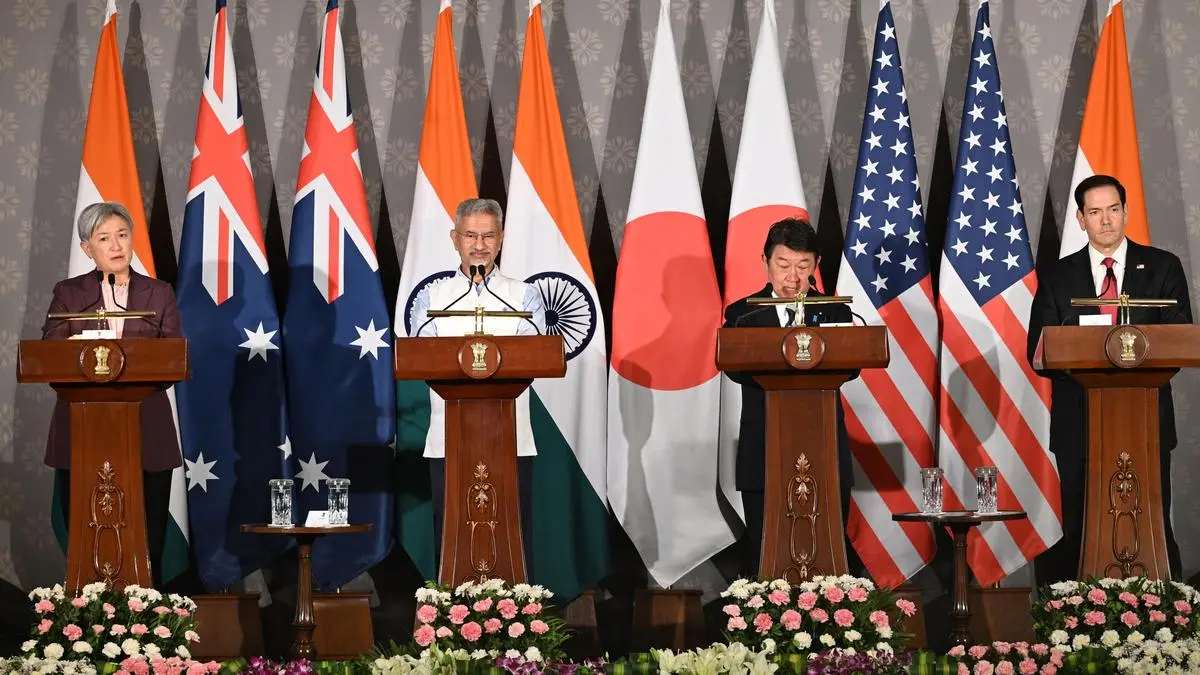
In a strategic move to counter China's dominance in critical minerals, the Quad nations—India, the US, Australia, and Japan—have announced a $20 billion minerals framework. This initiative aims to strengthen global supply chains and reduce reliance on any single country. The announcement was made during a meeting hosted by External Affairs Minister S Jaishankar in Delhi.

Strategic Minerals Framework

The Quad's new framework will mobilize funds through public and private sector mechanisms, including export credit agencies and development finance institutions. The focus will be on projects within Quad countries or those supplying Quad markets.

  • Funding Mechanisms: Export credit agencies, development finance institutions
  • Target Projects: Located within Quad countries or supplying Quad markets

"We underscore the importance of diversified and reliable global supply chains," stated the Quad Foreign Ministers.

Criticism of Iran's Maritime Tolls

The Quad also addressed concerns in West Asia, condemning Iran's imposition of maritime service charges on vessels passing through the Strait of Hormuz. This move by Iran, aimed at covering reconstruction costs, has been criticized for potentially disrupting global commerce.

Country Action Impact
Iran Imposed maritime tolls Potential disruption in global shipping
Quad Criticized tolls Advocated for free commerce

Indo-Pacific Initiatives

In addition to the minerals framework, the Quad launched the Indo-Pacific Maritime Surveillance Collaboration (IPMSC) and the Quad Initiative on Indo-Pacific Energy Security. These initiatives aim to enhance information sharing and energy cooperation among member countries.

  • IPMSC: Improves information sharing
  • Energy Security Initiative: Focuses on energy technology and policy cooperation

Keep Reading

Recommended Stories

India, Japan Strengthen Indo-Pacific Trade Ties Trade

India, Japan Strengthen Indo-Pacific Trade Ties

India and Japan have aligned their strategies to enhance trade and economic security in the Indo-Pacific region. This collaboration aims to strengthen supply chain resilience and promote economic growth through investment and innovation.

June 1, 2026
US report names India among 41 countries enabling Chinese goods to bypass tariffs Trade

US report names India among 41 countries enabling Chinese goods to bypass tariffs

A US report titled 'The Great Transshipment Scam' authored by Peter Navarro classified India and 40 other countries as enablers of Chinese tariff evasion. The report estimated $67 billion in US-bound goods were trans-shipped through Mexico, India, and Vietnam in 2025, costing $28 billion in lost tariff revenue. It named India's Pune-Gujarat-Chennai belt among 'Ugly Sister City pairs' enabling the practice.

August 14, 2026
New U.S. Tariffs Target Imports From China, Mexico, Canada and 57 Other Economies Trade

New U.S. Tariffs Target Imports From China, Mexico, Canada and 57 Other Economies

The Trump administration replaced its temporary 10% global tariff with a new Section 301 tariff regime covering 60 economies that account for 99.4% of U.S. imports. The duties, ranging from 10% to 12.5%, took effect July 24, 2026, and are based on forced labor investigations. Hundreds of product exemptions and tariff-rate quotas for textiles were also announced.

July 24, 2026
Iran-US Interim Peace Deal May Support India's Growth But Inflation and Fiscal Risks Remain: RBI Trade

Iran-US Interim Peace Deal May Support India's Growth But Inflation and Fiscal Risks Remain: RBI

The Reserve Bank of India, in its bi-annual Financial Stability Report, stated that the interim peace deal between Iran and the United States could support India's economic growth by normalising supply chains and easing geopolitical tensions. However, it warned that elevated oil and commodity prices, along with weaker global growth, could weigh on domestic expansion in 2026-27, while inflation and fiscal deficit pressures remain key concerns.

July 8, 2026