The Union cabinet on Friday approved a Rs 1,264-crore railway project to add a third and fourth rail line on the Ballari-Guntakal section across Karnataka and Andhra Pradesh, a move that will directly ease congestion on a key freight corridor and unlock additional capacity for bulk commodity movements, according to the government.
Project Details
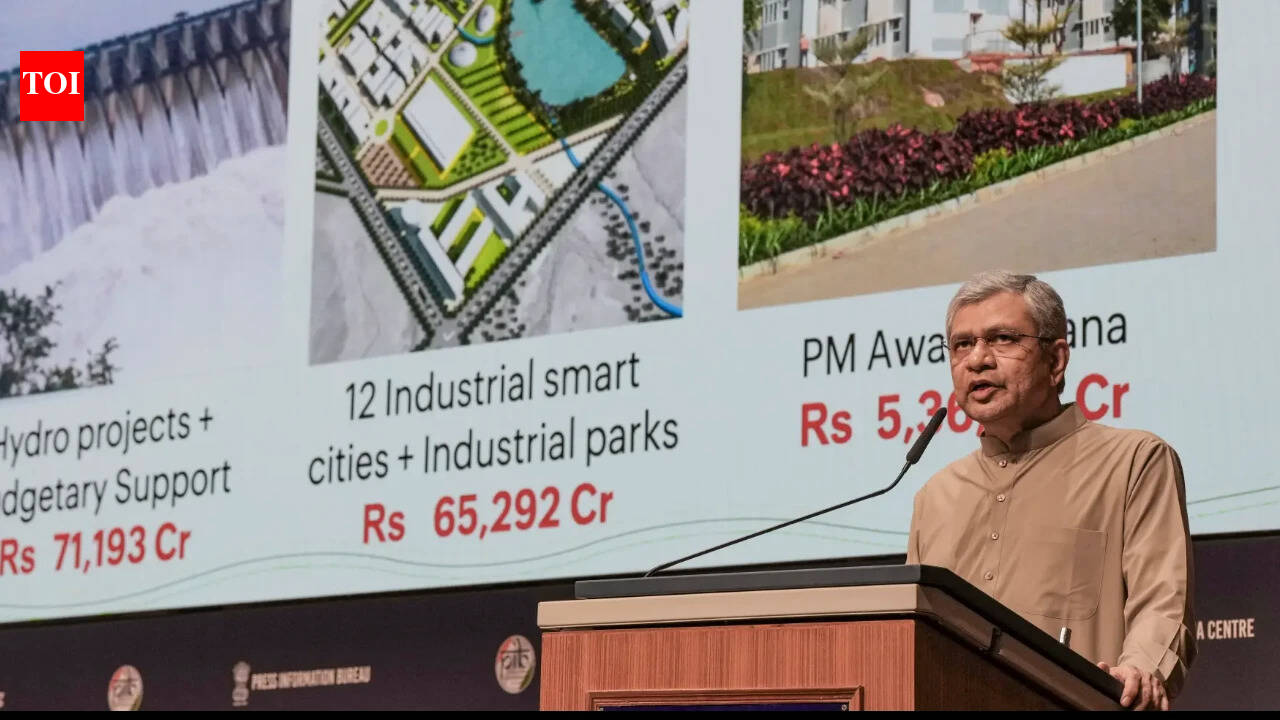
The project was cleared by the Cabinet Committee on Economic Affairs (CCEA), chaired by Prime Minister Narendra Modi, and falls under the PM Gati Shakti National Master Plan for multimodal connectivity. Union railways minister Ashwini Vaishnaw announced the decision, saying, "The Cabinet has taken two big decisions. First, approval has been given for the third and fourth line on the Ballari-Guntakal rail section, which falls on the important economic corridor between Andhra Pradesh and Karnataka. The project will be done with an investment of Rs 1,264 crore."
The multi-tracking project will add 46 kilometres to the Indian Railways network and is scheduled for completion by 2028-29. It spans three districts across Karnataka and Andhra Pradesh, improving connectivity for nearly 99 villages with a combined population of around seven lakh, according to the government.
Freight Impact
The Ballari-Guntakal route is a major freight corridor used for transporting commodities such as iron ore, dolomite, limestone, iron and steel, coal, fertilisers and food grains, the government stated. The capacity expansion is expected to generate an additional 16.22 million tonnes per annum (MTPA) of freight traffic. This will directly benefit shippers moving bulk commodities between the two states and beyond.
| Metric | Value |
|---|---|
| Project cost | Rs 1,264 crore |
| New track length | 46 km |
| Additional freight capacity | 16.22 MTPA |
| Targeted completion | 2028-29 |
| Villages benefited | ~99 |
| Population served | ~7 lakh |
Minister Vaishnaw also noted that the Detailed Project Report (DPR) for the proposed Hospet-Hubballi railway line is under preparation, indicating further network expansion in the region.
Environmental and Operational Benefits
The government said the project would improve operational efficiency and service reliability while reducing congestion on the existing route. By shifting freight from road to rail, the initiative is estimated to save 1.32 crore litres of oil and cut 6.67 crore kilograms of carbon dioxide emissions, equivalent to planting 0.27 crore trees. These savings align with India's climate goals and support the 'Atmanirbhar Bharat' vision by promoting regional development and employment, according to the government statement.
Logistics and Tourism Implications
For freight forwarders and logistics managers, the additional line capacity means smoother movement of goods, reduced transit times, and lower logistics costs on the Ballari-Guntakal corridor. The project also improves rail access to tourist destinations such as Ballari Fort and Sri Kumara Swamy Temple, though the primary impact remains on freight. The integration with PM Gati Shakti ensures coordinated planning across road, rail, and other modes.
As the project progresses toward its 2028-29 completion, stakeholders should monitor construction milestones and potential disruptions. The additional 16.22 MTPA capacity will be a significant boost for industries reliant on rail for bulk transport, particularly in the mining and steel sectors in the region.
Sources: