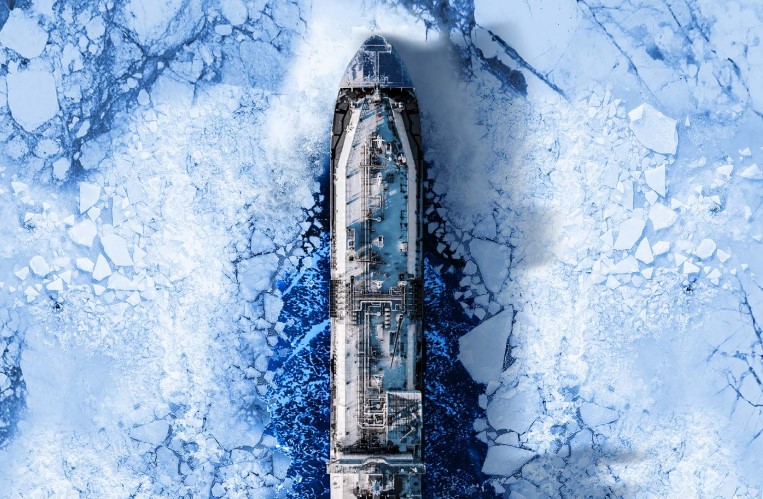
The UK has sanctioned four liquefied natural gas carriers as part of a broader package targeting Russia's emerging LNG shadow fleet, introducing new compliance risks for LNG traders, carriers, and logistics providers involved in Russian energy supply chains.
According to Splash247, the UK is the first country to directly target Russia's LNG shadow fleet. The latest measures cover 27 tankers in total, bringing the number of Russia-linked ships sanctioned by the UK to more than 600. While 23 of the vessels had already been sanctioned by the European Union, the remaining four LNG carriers represent new additions. The four vessels — Orion, Kosmos, Merkuriy, and Luch — were acquired from a Middle Eastern shipowner during the first quarter of this year and subsequently deployed into Russian LNG trades.
Russia's LNG shadow fleet grows
Maritime risk and compliance specialist Windward reported that the sanctions provide the clearest evidence yet that Russia has been quietly assembling a dedicated LNG shadow fleet ahead of new EU measures due to take effect on January 1, 2027. Windward's analysis shows that the four newly sanctioned vessels are part of a wider group of six elderly LNG carriers, all at least 19 years old, that have been purchased and redirected into Russian LNG trades over the past five months. The company has also identified a further seven ageing LNG carriers acquired by anonymous entities between February 2024 and May 2025 that subsequently entered Russian LNG service.
Combined with 10 newbuild LNG carriers delivered to state-controlled Russian shipowners, Windward estimates Russia's LNG shadow fleet now stands at around 23 vessels. The pattern mirrors the development of Russia's oil tanker shadow fleet, where older vessels are acquired through opaque ownership structures, transferred into Russian trades shortly after purchase, and operated outside the mainstream commercial ecosystem.
| Fleet component | Number of vessels | Source detail |
|---|---|---|
| Newly sanctioned LNG carriers (this week) | 4 | Acquired in Q1 2026 from Middle Eastern owner |
| Elderly LNG carriers redirected (past 5 months) | 6 | Part of wider group, all ≥19 years old |
| Ageing LNG carriers acquired Feb 2024 – May 2025 | 7 | Anonymous entities, entered Russian LNG service |
| Newbuild LNG carriers (state-controlled owners) | 10 | Delivered to Russian state-controlled shipowners |
| Estimated total LNG shadow fleet | ~23 | Windward estimate |
Broader sanctions package and compliance implications
The UK sanctions package extends beyond shipping. It also targets a Russian state-linked procurement network accused of sourcing Western technology for military purposes, as well as third-country financial intermediaries alleged to be helping Russia move money outside sanctioned channels, according to Splash247. The UK's move comes in the same week the European Union unveiled its own latest sanctions package against Russia, while G7 leaders have also been discussing further measures in France. Brussels added 34 individuals and 47 entities to its sanctions list, including shipping-linked operations of Gazprom and Lukoil as well as 24 companies and associated vessels accused of supporting Russian oil exports through shadow fleet networks.
For compliance teams at freight forwarders, ocean carriers, and port authorities, Windward believes the latest sanctions reinforce the need to monitor ownership changes and trading patterns rather than relying solely on sanctions lists. The company expects further alignment between Western jurisdictions over the coming months, with additional sanctions likely to follow against the same LNG vessel cohort.
Watch list
- EU measures effective January 1, 2027: The upcoming EU restrictions on LNG exports are driving Russia's fleet acquisition now, according to Windward.
- Further UK and EU sanctions: Additional measures against the same LNG vessel cohort are expected as Western jurisdictions align.
- G7 discussion: G7 leaders have been discussing further measures in France, which could lead to coordinated action.
- Vessel ownership changes: Shippers and carriers should monitor the opaque ownership structures used to acquire ageing LNG carriers for Russian trades.
Sources: