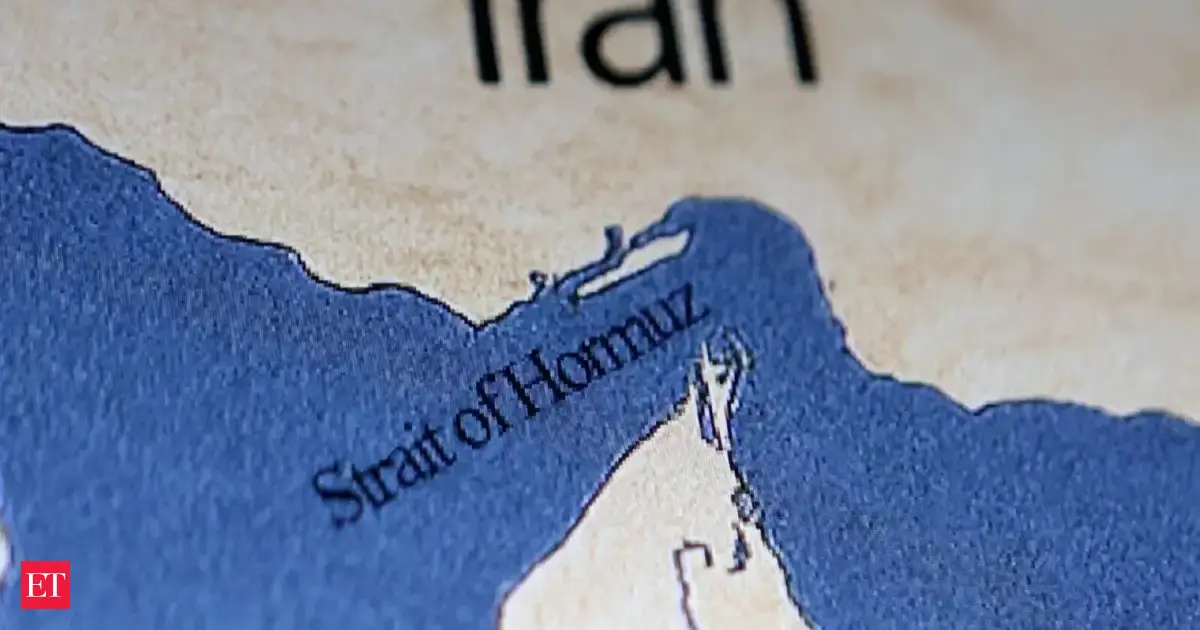
The United States military has overseen scores of secretive ship-to-ship oil transfers near the Strait of Hormuz, using aerial and water drones as well as helicopters to guide convoys to awaiting tankers, according to a Reuters investigation published by The Hindu BusinessLine. The operation, which employs a shuttling technique long used by Iran to skirt sanctions, aims to keep Gulf energy exports flowing despite Iran's effective closure of the Strait—through which roughly a fifth of global oil consumption normally passes.
Operation Details and Scale
The transfers take place at two specific locations identified by 11 people familiar with the operation: one off the coast of Fujairah in the United Arab Emirates and the other off Oman's port of Sohar, Reuters reported. The operation started in early May, and at least 116 ships have been involved, based on shipping data and satellite imagery reviewed by Reuters. As recently as Tuesday morning, 12 pairs of ships could be seen side-by-side in the Gulf of Oman: eight off Sohar and four near Fujairah. Last week on June 11, when activity appeared to have peaked, 17 pairs of ships were observed carrying out simultaneous transfers at the two sites.
The operation is fully controlled by the U.S. military, said eight sources, including a private security contractor who has been involved. A U.S. defense official, however, told Reuters that no Central Command forces are taking part in an offshore ship-to-ship oil transfer operation.
Role of the Apache Helicopter
An Apache helicopter downed by Iran on June 9—sparking retaliatory bombings by the U.S.—was involved in the mission, according to four sources, including a former U.S. official with knowledge of the attack. Using satellite imagery, Reuters counted six pairs of tanker ships clustered together off Sohar the day the Apache was shot down. Reuters could not confirm what role the Apache played in the operation. Both crew members were rescued by a drone boat, U.S. officials said.
Impact on Energy Security and Shipping
The Strait of Hormuz closure, which Iran responded with after the U.S.-Israeli war, has created the biggest global energy supply disruption in history and spurred inflation around the world, according to Reuters. The ship-to-ship transfers, though risky and inefficient, appear to be part of the Trump administration's efforts to help restore normal oil flows from the Gulf. U.S. President Donald Trump said the Strait of Hormuz would reopen Friday under a framework peace deal with Iran announced this week, but details remain vague.
Risks and Recent Incidents
The two transfer spots are close to boundaries drawn by the Persian Gulf Strait Authority, a new Iranian body established to manage the Hormuz Strait. Ships that fail to comply with Iran's orders are at risk of drone and missile attack by the Islamic Revolutionary Guard Corps. The Fujairah port itself has come under repeated Iranian fire during this U.S.-led operation. This past weekend, according to the British maritime risk management group Vanguard, an “unknown projectile” struck a tanker off the coast of Oman. Vanguard said the crew was safe and the impact caused some leakage of the cargo but no environmental damage. It did not specify whether that tanker was involved in a transfer.
Watch List
Operators in the region should monitor the status of the announced peace deal between the U.S. and Iran and its effect on the Strait of Hormuz reopening. Iranian drone and missile threats to vessels near the transfer zones remain elevated. The volume and pace of ship-to-ship transfers could shift if the deal takes effect or if further incidents occur.
Table: Ship-to-ship transfer activity observed (from Reuters data)
| Location | Peak pairs (June 11) | Recent pairs (Tuesday) | Total ships involved since early May |
|---|---|---|---|
| Off Sohar, Oman | 9 (estimated) | 8 | 58 (est.) |
| Off Fujairah, UAE | 8 (estimated) | 4 | 58 (est.) |
| Total | 17 | 12 | 116 |
Sources: