iGEN
Visit IGEN World Explore IGEN Expo
EXPLORE UPGRADE PLANS
BREAKING
Werner Enterprises Posts Highest Revenue Per Truck Growth in One-Way Segment in a Decade CMA CGM and Stonepeak Launch United Ports LLC in $2.4 Billion Terminal Joint Venture UPS shift away from Amazon shows bigger payoff Lanesurf: 62% of Loads Get Vetted Carrier Offers Before Brokers Arrive India-China Border Trade Via Lipulekh Resumes Aug 1; China Permits 20 Traders Geopolitics Drives CMA CGM Q2 Profit Surge of 42% as Volumes and Rates Climb Benchmark Diesel Price Rises Third Week as Futures Plunge; Spread Hits Record Indian Government Limits Sugar Dealers to 400 Tonnes Stock Until November to Curb Hoarding Tenants signing longer leases for larger warehouses as 3PLs lock in capacity US stock market flat as S&P 500 and Dow barely move, Nasdaq slides over 1% on chip rout Werner Enterprises Posts Highest Revenue Per Truck Growth in One-Way Segment in a Decade CMA CGM and Stonepeak Launch United Ports LLC in $2.4 Billion Terminal Joint Venture UPS shift away from Amazon shows bigger payoff Lanesurf: 62% of Loads Get Vetted Carrier Offers Before Brokers Arrive India-China Border Trade Via Lipulekh Resumes Aug 1; China Permits 20 Traders Geopolitics Drives CMA CGM Q2 Profit Surge of 42% as Volumes and Rates Climb Benchmark Diesel Price Rises Third Week as Futures Plunge; Spread Hits Record Indian Government Limits Sugar Dealers to 400 Tonnes Stock Until November to Curb Hoarding Tenants signing longer leases for larger warehouses as 3PLs lock in capacity US stock market flat as S&P 500 and Dow barely move, Nasdaq slides over 1% on chip rout
Home ›› Manufacturing ›› Mfg Machinery ›› India's Indigenous Bullet Train Project: An Engineering Leap for Manufacturing

India's Indigenous Bullet Train Project: An Engineering Leap for Manufacturing

India's first bullet train service on the Surat–Bilimora section is expected by August 2027. The trains will be manufactured indigenously, with a Rs 866.87 crore contract awarded to BEML Limited for two prototype high-speed train sets. This marks a significant engineering leap, requiring new capabilities in lightweight construction, advanced braking, and high-speed control systems.

iG
iGEN Editorial
June 26, 2026
India's Indigenous Bullet Train Project: An Engineering Leap for Manufacturing

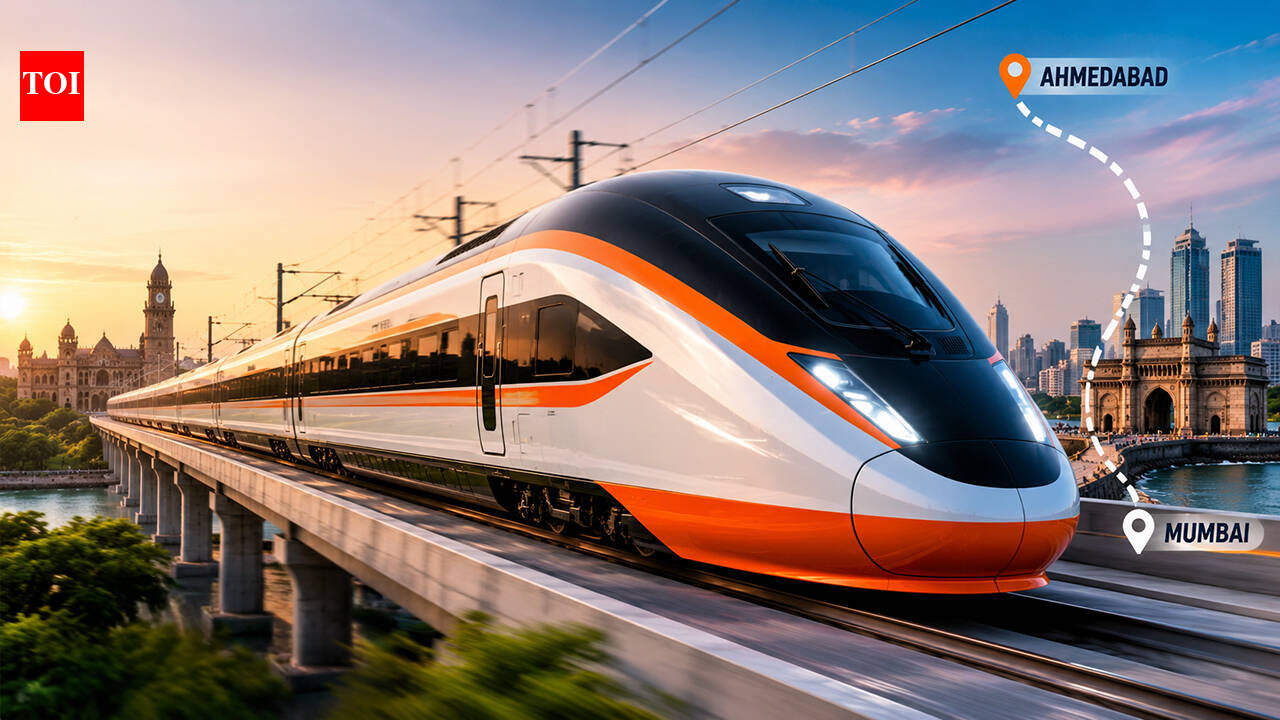
India's first bullet train service is expected to launch on the Surat–Bilimora section of the Mumbai-Ahmedabad corridor by August 2027, according to a report by Business Today. A key aspect of the project is that the trains will be manufactured indigenously, representing a major milestone for India's manufacturing capabilities under the 'Make in India' initiative.

The Manufacturing Contract

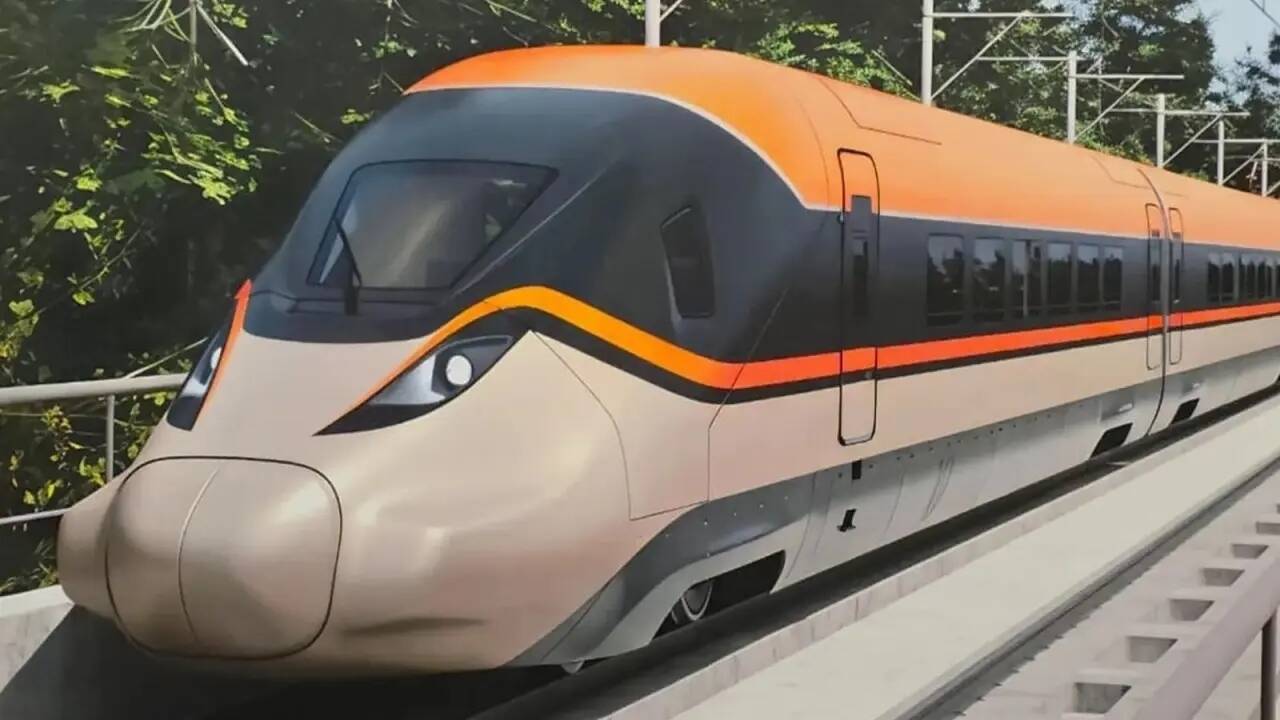
A Rs 866.87 crore contract has been awarded to BEML Limited by Integral Coach Factory (ICF) Chennai for the design, manufacturing, and commissioning of two prototype bullet train sets, each with eight coaches. The trains, codenamed B-28, are designed to achieve speeds of over 250 kmph, with a design speed of 280 kmph. Rollout timelines are set for 2027, and sources told TOI that designs are currently being finalised.

To support production, BEML has built a dedicated 'Aditya' High-Speed Rail Complex in Bengaluru. The trains will be fully air-conditioned chair cars with world-class amenities, including advanced onboard infotainment, reclining and rotatable seats, and dedicated facilities for divyangjans (persons with disabilities).

Engineering Challenges and Technological Leap

Feature Traditional LHB Coaches Bullet Train (B-28)
Maximum speed ~160 kmph 280 kmph (design)
Body material Stainless steel (initial) Stainless steel initially, aluminium for >300 kmph
Key systems Standard propulsion and braking Advanced motors, software control, world-class braking, crash safety, aerodynamics
Interior Basic AC chair cars Rotatable/reclining seats, infotainment, divyangjan amenities

The move to indigenous bullet train manufacturing is described by experts as an engineering leap for India. Unlike the LHB coaches currently produced, bullet trains require a lightweight yet strong body, advanced wheels and suspension for smooth high-speed travel, and sophisticated train control systems to handle sudden air-pressure changes. Indian Railways aims to master technologies such as powerful motors, software control, and aerodynamic design.

For the initial trains, Indian Railways is using stainless steel. However, Railway Minister Ashwini Vaishnaw has announced that the next set of bullet trains will be designed for speeds of 350 kmph. Sources told TOI that for speeds exceeding 300 kmph, aluminium train sets will be manufactured in India — another first.

Adaptation to Indian Conditions

Globally, bullet trains in Europe and Japan are engineered for cold climates. India's trains must contend with heat and dust, and the B-28 train sets will be manufactured accordingly. This adaptation is a critical part of the design process.

Another major challenge is the lack of a dedicated high-speed testing track, which is essential to thoroughly test the trains before they carry passengers. This remains a significant hurdle for the project.

Implications for Indian Manufacturing

The indigenous bullet train project is a testament to India's growing capabilities in high-tech manufacturing. For industrial executives and procurement professionals, the development signals new opportunities in precision engineering, advanced materials, and systems integration. The 'Make in India' push is creating demand for specialised suppliers in areas such as braking systems, train control software, and lightweight body panels.

While the immediate focus is on the two prototype sets, the long-term vision — with speeds eventually reaching 350 kmph — will require sustained investment in R&D, testing infrastructure, and supply chain development. The 'Aditya' complex in Bengaluru could become a hub for high-speed rail manufacturing, potentially attracting ancillaries and fostering a new ecosystem.


Sources: Business-Today
Keep Reading

Recommended Stories

India Cabinet Approves Seven Major Decisions: Semicon 2.0, Mobile Manufacturing, Urea Plants, and Rail Projects Manufacturing

India Cabinet Approves Seven Major Decisions: Semicon 2.0, Mobile Manufacturing, Urea Plants, and Rail Projects

The Union Cabinet has approved seven major decisions covering infrastructure, semiconductor manufacturing, mobile phone production, fertiliser and railway projects. The package includes Semicon 2.0, the Mobile Phone Manufacturing Scheme (MPMS) and the National Investment Policy for Urea-2026, with a combined outlay of Rs 2,19,353 crore. Key projects include a 46-km link corridor in Varanasi, doubling of Paradeep-Haridaspur railway line, and a fourth line between Dangoaposi and Rajkharsawan.

July 15, 2026
India to Resume Train Coach Exports to Bangladesh, First Shipment Since Hasina Ouster Likely in July Manufacturing

India to Resume Train Coach Exports to Bangladesh, First Shipment Since Hasina Ouster Likely in July

India is set to resume train coach exports to Bangladesh, with the first shipment of 200 broad-gauge passenger coaches likely in July 2026. The contract, awarded to RITES in May 2024 and funded by the European Investment Bank, was delayed by political transition but is now back on track. Coaches are being manufactured at the Rail Coach Factory in Kapurthala, Punjab.

June 23, 2026
India's Bullet Train Project: Indigenous Trains, Interoperable Signalling Set for 2027 Launch Logistics

India's Bullet Train Project: Indigenous Trains, Interoperable Signalling Set for 2027 Launch

India and Japan jointly progress the Mumbai-Ahmedabad high-speed rail project, with indigenous bullet trains manufactured by BEML. Trials are set for mid-2027, and commercial services aim to start in August 2027 on the Surat-Vapi stretch. The trainsets, with a design speed of 280 kmph, are being built at BEML's 'Aditya' complex in Bengaluru.

July 20, 2026
Manufacturing Apprenticeships Blend Age-Old Skills with Modern Technology Training Manufacturing

Manufacturing Apprenticeships Blend Age-Old Skills with Modern Technology Training

The Heritage Skills Academy's level three apprenticeship combines 3D printing and CAD with traditional engineering skills. Government data shows a nearly quarter decline in lower-level apprenticeships as higher-level programmes gain traction.

July 20, 2026