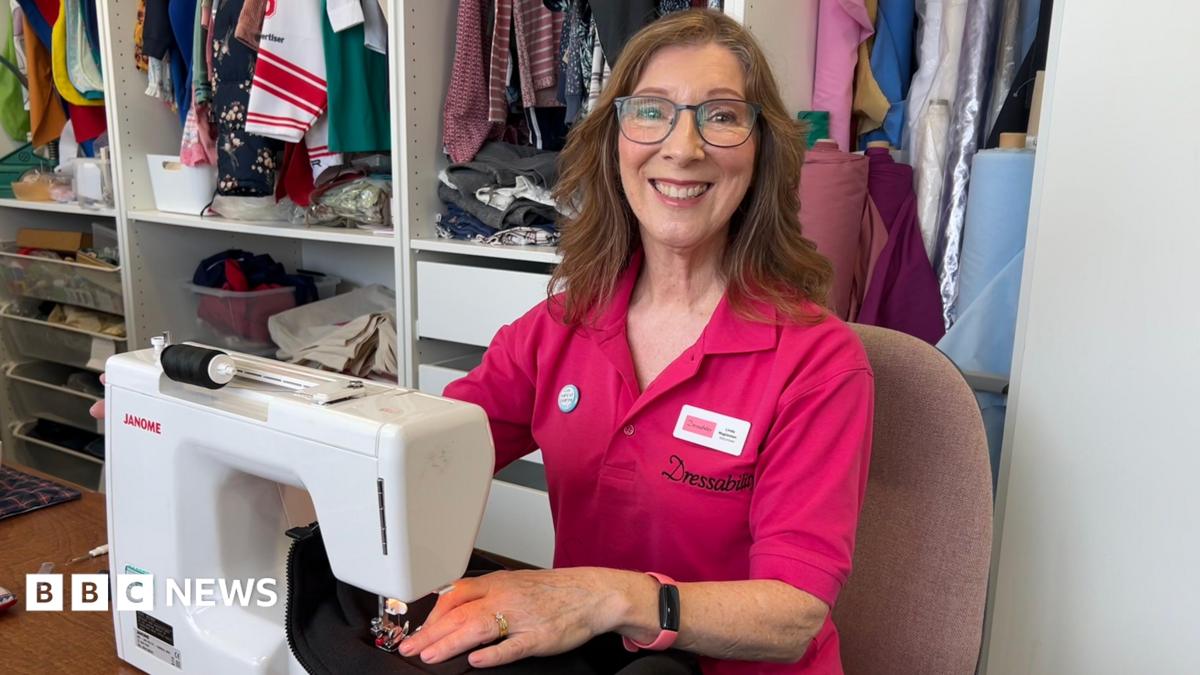
More than 1,000 brand-new coats, fleeces and other garments are being diverted from landfill every year through a rebranding project run by Dressability, a clothing charity in Swindon, according to the BBC. The project, which began after Dressability received a delivery of coats from a company that ceased trading, has expanded beyond its original service area of Swindon and Wiltshire to send altered clothing as far as Liverpool and Ukraine.
Scale and value of the rebranding operation
Dressability general manager Sharon Tombs told the BBC that demand for the project has grown rapidly, with more than 1,000 items now altered and distributed each year.
"We get a brand new coat for example that can be worth up to £100 and people in need, such as the homeless, can benefit," Tombs said.
The charity's core work is altering clothing for people with disabilities. The rebranding project launched after an unexpected delivery of coats. Tombs said the team "sensitively patched and improved them, covering the branding" rather than discarding the garments. She said the work is also about sustainability, "because our work prevents these items from going to landfill."
Surplus stock from embroidery production
One company supplying garments is Osnic Embroidery in Weston-super-Mare, which produces clothing with bespoke logos for businesses. Michael Osmond of Osnic told the BBC that surplus stock is inherent to some categories of branded apparel production.
"You've got spare garments because companies change their logos or they have discontinued items, sometimes a needle breaks in the machine and the logo is ruined and you can't sell it," Osmond said.
Osnic's surplus spans coats, fleeces, t-shirts, shorts and trousers. Instead of disposal, the items are sent to Dressability, where logos are covered or removed before the clothes can be used again.
Impact on recipients
One organisation that benefits is the Swindon Night Shelter. Manager Dawn Prosser said the donated coats have made a visible difference.
"When we show people and ask which size they need, they can't believe how good the coat is and we say that's what we want, to show you there's a way forward and to give you the best that we can really. It's gives people self esteem as well as keeping them warm and dry," Prosser said.
Patrick Lewis, a volunteer at the shelter who was formerly homeless, received one of the coats.
"It was really nice. It kept me warm and dry during the winter period. I wasn't expecting something like that and I really needed it because when I was homeless I lost all my things, everything," Lewis said.
Rebranding project data
| Metric | Figure |
|---|---|
| Items altered and distributed annually | 1,000+ |
| Value of a single new coat | Up to £100 |
| Initial distribution area | Swindon and Wiltshire |
| Current distribution reach | Liverpool and Ukraine |
| Garment supplier | Osnic Embroidery, Weston-super-Mare |
| Beneficiary example | Swindon Night Shelter |
For textile and apparel manufacturers, the BBC report outlines a practical reuse route for surplus stock that cannot be sold: garments with outdated logos, discontinued items and pieces with minor production faults caused by machine errors. The Dressability model takes that inventory, patches and improves it, removes the branding, and channels it to charities serving people in need, keeping new clothing in circulation rather than sending it to landfill.
Sources: