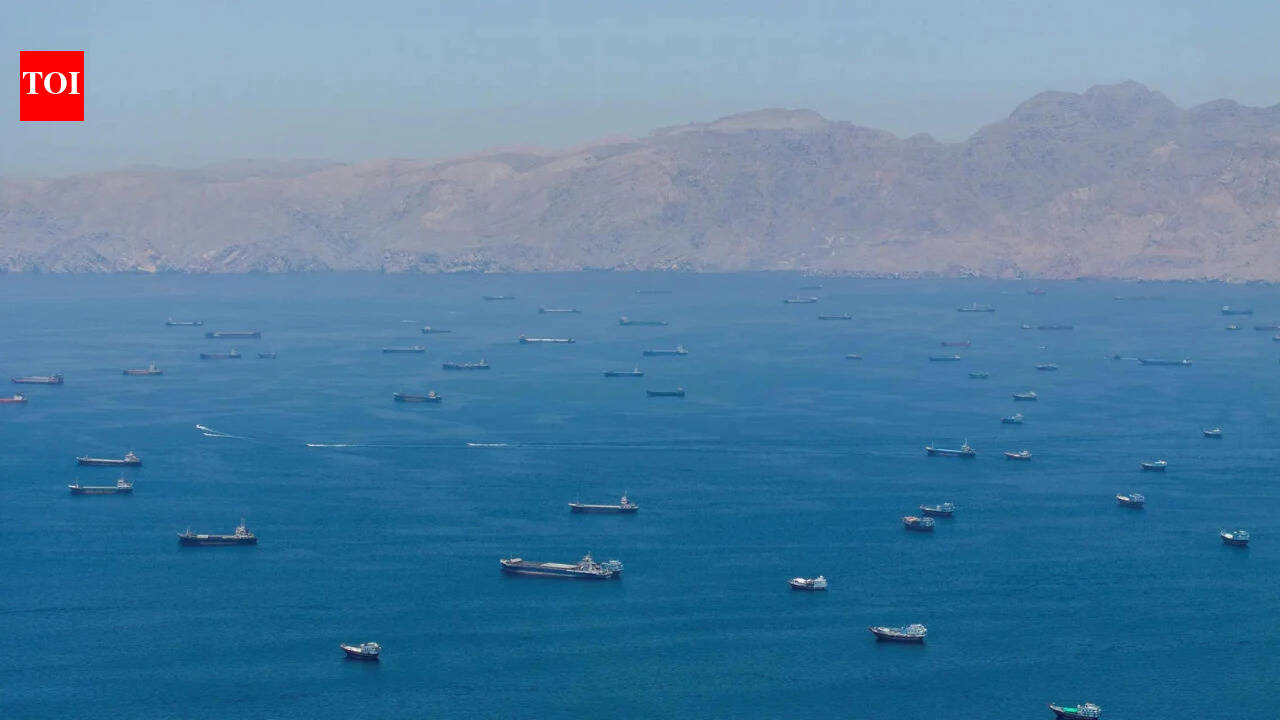
Oil flows through the Strait of Hormuz may recover to only about 70% of their pre-war level after the conflict between the US and Iran, according to Goldman Sachs Group Inc. In a note dated June 17 titled “70 per cent of Pre-War Hormuz Flows Might Become the New 100 per cent”, analysts including Yulia Zhestkova Grigsby wrote that a normalization of Gulf exports to pre-war levels would require a 13-million-barrel-a-day increase in Hormuz flows from current levels.
Pre-war flows through the strategic chokepoint stood at about 20 million barrels of oil and products per day, according to the International Energy Agency. The expected pickup in shipments may be completed by the end of next month (July 2026), with Gulf production likely to recover by October, the analysts said.
Supply Shift: Alternative Routes and Infrastructure
During the hostilities, regional producers including Saudi Arabia, the United Arab Emirates, and Iraq made increased use of infrastructure that bypassed the Strait, maintaining vital energy flows to global customers. Saudi Aramco boosted usage of a cross-country pipeline routing crude to its Red Sea coast; the UAE tapped a pipeline to the port of Fujairah, which sits outside the strait; and Iraq sent oil to the Turkish port of Ceyhan.
At present, visible flows through Hormuz are estimated at about 1.3 million barrels a day, with an additional 1.6 million barrels per day from the Gulf of Oman that could be linked to so-called dark crossings, according to the Goldman analysts. Meanwhile, a total of 7.5 million barrels per day were going through the Red Sea port of Yanbu, as well as Fujairah and Ceyhan.
| Route / Chokepoint | Pre-war flows (mb/d) | Current estimated flows (mb/d) | Post-war projected (mb/d) |
|---|---|---|---|
| Strait of Hormuz | ~20.0 | ~1.3 | ~14.0 (70% of pre-war) |
| Alternative routes (Yanbu, Fujairah, Ceyhan) | ~? | 7.5 | Reduced but sustained |
| Gulf of Oman dark crossings | — | 1.6 | — |
Note: Pre-war flow figure from IEA; current and projected from Goldman Sachs note dated June 17, 2026.
Demand and Shipping Dynamics
The global oil market is zeroed in on activity in the critical waterway after the US and Iran inked an interim deal to end their war and reopen Hormuz. During the conflict, crude shipments through the artery collapsed to a trickle as both sides imposed a dual blockade, choking off almost all commercial traffic. That initially supercharged crude prices, although they have since retreated.
The availability of ships is unlikely to be a constraint on the recovery in flows, with around 860 million barrels of empty tanker capacity positioned in the strait or within five days’ navigation, the analysts said. However, some shipowners may still be averse to sending vessels through the strait, they added.
Outlook: Regional Independence from Hormuz
This month, the UAE said it was working on an ambitious plan to try to end its dependence on the chokepoint entirely, expanding its eastern ports of Dibba, Fujairah, and Khor Fakkan — which sit outside the strait on the Gulf of Oman coast — and by building at least one new harbor on the same coastline.
“We’re moving toward having zero Hormuz dependency and that’s regardless of whether it’s open or not,” the UAE’s Minister of Foreign Trade Thani Al Zeyoudi said in an interview. “It’s going to open and we hope that will happen quickly, but we will not stop the new plan.”
Kuwait, meanwhile, has said it was seeking pipeline alternatives to export its crude. State producer Kuwait Petroleum Corp. is in talks with Saudi Arabia and UAE about expanding their pipeline systems to handle Kuwaiti barrels, CEO Sheikh Nawaf Al-Sabah told a conference.
The Goldman Sachs analysis underscores that even after the strait reopens, the infrastructure investments made during the war — combined with ongoing Gulf state efforts to diversify export routes — may permanently reshape global crude flow patterns. Traders and procurement teams should monitor the pace of recovery in Hormuz traffic, the expansion of alternative capacity, and any lingering risk aversion among shipowners, as these factors will determine the new equilibrium for Middle East crude supply.
Sources: