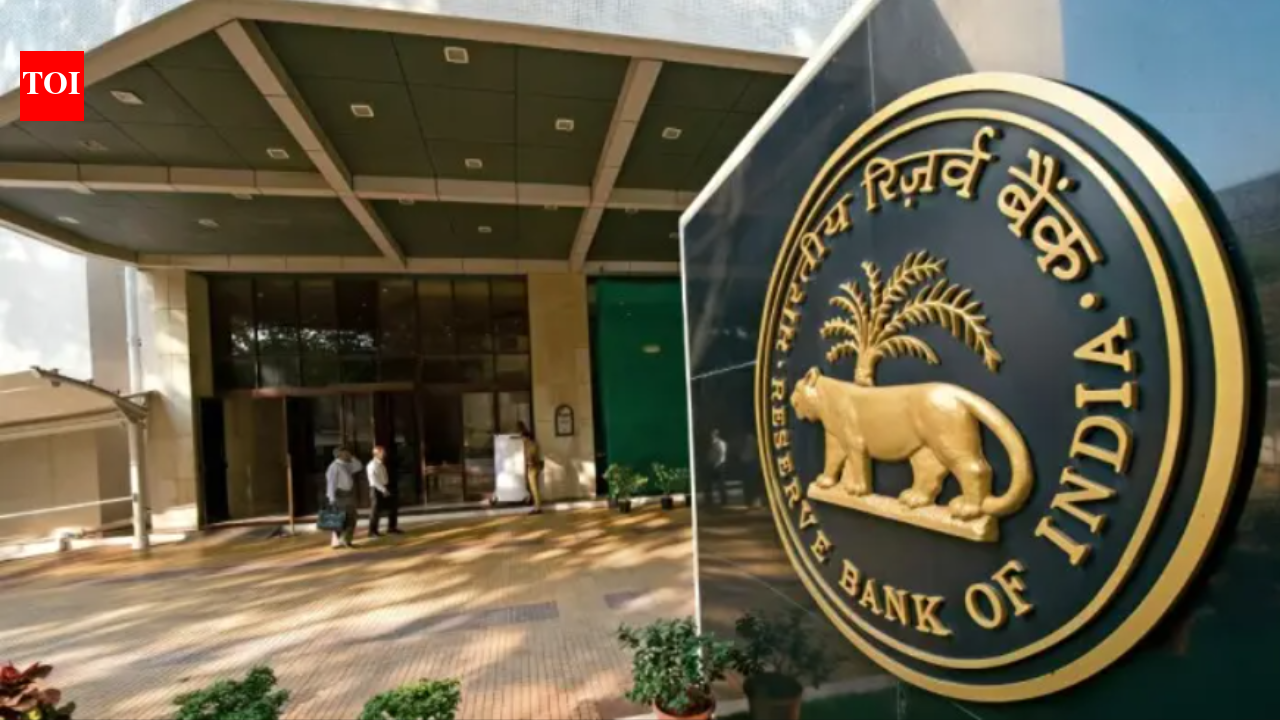
The Reserve Bank of India (RBI) is expected to leave interest rates unchanged at its monetary policy committee (MPC) meeting on August 5, according to a Business-Today report by Mayur Shetty. Economists see little case for an immediate policy move despite rising inflation risks, with a stable rupee, resilient domestic growth and uncertainty over crude oil prices shaping expectations for a hold.
MPC expected to hold the repo rate
High-frequency indicators, including industrial output and GST collections, point to resilient domestic activity, Business-Today reported. The main uncertainty lies abroad: volatility in West Asia and its effect on crude oil prices remain the chief risk. Concerns over El Nino have receded, reducing the urgency for further monetary easing. A positive Indian Ocean Dipole stood at +0.44 degrees Celsius on July 26; the difference in sea surface temperatures between the western and eastern Indian Ocean could support rainfall and offset initial monsoon shortfalls, the report said.
Inflation path points to status quo
According to Soumya Kanti Ghosh, chief economist of SBI group, “With CPI inflation likely to remain above 5% for the next two quarters and likely average of 5% in FY27, we believe RBI will maintain status quo”. Ghosh projects CPI inflation at 3.9% in Q1 FY27, 5.2% in Q2, 5.6% in Q3 and 5.0% in Q4, taking the FY27 average to around 5%.
| Indicator | Q1 FY27 | Q2 FY27 | Q3 FY27 | Q4 FY27 | FY27 avg |
|---|---|---|---|---|---|
| CPI inflation (Ghosh) | 3.9% | 5.2% | 5.6% | 5.0% | ~5% |
Ghosh also expects Q1 FY27 real GDP growth to outperform the RBI’s earlier projection of 6.6% and come in at around 7.0%.
“A rate hold can still move markets if the statement shifts the balance between growth comfort and inflation / FX vigilance.”
Ghosh said the current backdrop has made soft language costlier: oil volatility, rupee pressure, caution over external flows and higher inflation projections make an explicitly dovish message less likely, even if the MPC keeps rates unchanged.
Rupee stabilisation and the forward book
Ghosh said investors should watch the RBI’s intervention in the short end of the forward book, where the short-end forward position has reduced by $13 billion, alongside cumulative foreign inflows of around $35 billion through FCNR(B) deposits and other channels.
According to Santanu Sengupta and Arjun Varma of Goldman Sachs, the rupee is expected to stabilise following RBI measures to attract foreign capital. “With the INR having broadly stabilised following the RBI’s recent FX measures, we see limited need for the MPC to turn more hawkish near term,” they said. The Goldman Sachs economists expect the RBI to lower its inflation forecast modestly, as crude oil prices remain below the $95 a barrel benchmark used at the June policy meeting.
What a hold means for trade finance and FX hedging
For CFOs and treasury professionals, a rate hold on August 5 would leave the policy rate unchanged, but the statement’s tone could still move markets. Ghosh’s observation that soft language has become costlier signals that the MPC may avoid a dovish tilt, which would keep near-term rupee borrowing costs for trade finance steady but leaves open the risk of a hawkish repricing if inflation projections are revised up. The $13 billion reduction in the short-end forward position and $35 billion of cumulative foreign inflows through FCNR(B) deposits and other channels indicate that RBI measures are reshaping FX hedging conditions; businesses with USD/INR exposure should monitor forward premia, particularly at the short end. Rupee stability, as highlighted by Goldman Sachs, reduces currency risk for importers and exporters, while crude oil prices staying below $95 a barrel supports a modestly lower inflation forecast, a factor that could influence the cost of capital for trade finance in the coming quarters.
Sources: