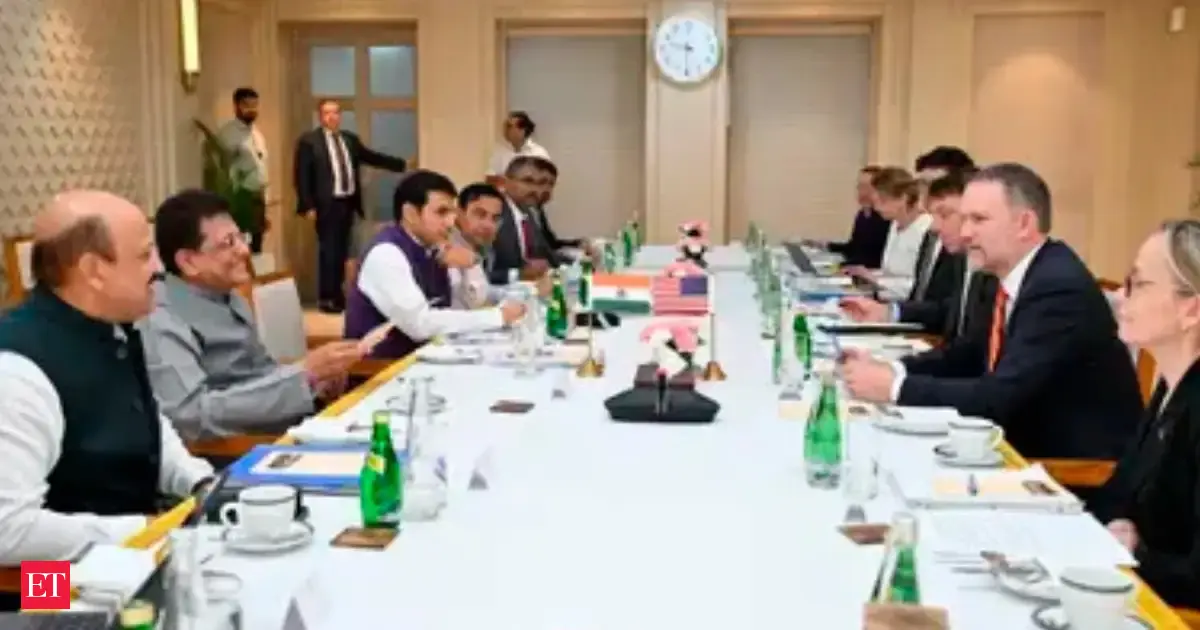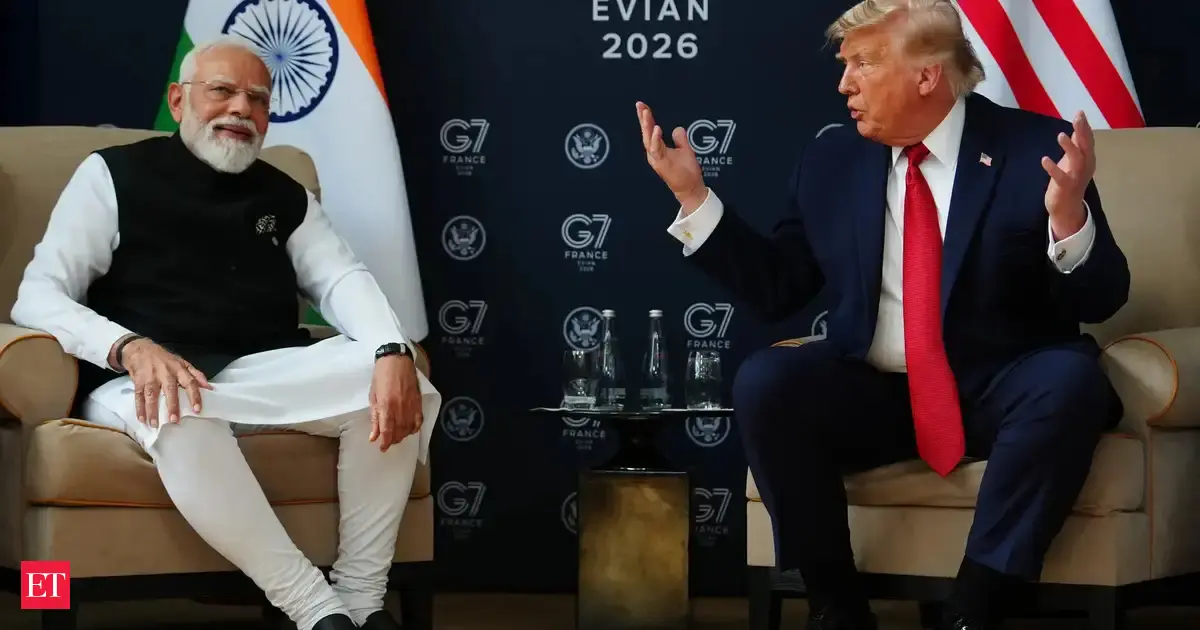
US President Donald Trump said that India and the United States are 'very close' to signing a bilateral trade deal, following a meeting with Prime Minister Narendra Modi at the G7 summit, according to a report by the Economic Times. The accord has been under negotiations for more than a year.
Trade deal negotiations
Speaking to reporters after the meeting, Trump stated, "We are very close" to a deal, according to the Economic Times. He described Modi as "a very tough negotiator, one of the toughest, actually." Trump added, "People say he's such a nice man," but countered, "I said he's very tough. He's a tough trader, and he loves the Indian people." Trump also mentioned he plans to visit India in the future but did not specify when.
Strait of Hormuz and seafarers' safety
The meeting took place against the backdrop of US attacks on ships in the Gulf staffed by Indian sailors during the Strait of Hormuz blockade. India had twice summoned US charge d'affaires Jason Meeks last week, and External Affairs Minister S. Jaishankar spoke to US Secretary of State Marco Rubio to register India's protest, according to the Economic Times.
Modi told Trump in his opening remarks, "Lakhs of Indian seafarers are on duty in different seas of the world in the sector of maritime trade. I believe that their security is equally important... I am confident that in the deal (with Iran), security of seafarers will be ensured and prioritised."
According to the US State Department, Rubio told Jaishankar that violations of the American blockade and the illicit transport of Iranian oil through the Strait of Hormuz "will not be tolerated" and insisted that commercial vessels must comply with instructions issued by US forces operating in the region. The attacks had sparked anger in India.
Strategic partnership and defence assurances
Trump highlighted the growing strategic and economic partnership between the two countries. When asked about defence ties, Trump described it as "a great relationship" and said that formal treaty obligations were not necessary to underscore US support. "We don't have a contract... but if they were attacked, we would be there to help them," Trump said, gesturing toward Modi. "If they're attacked and he's the leader, we're going to be there to help. Now, if there's a new leader, I'm not sure about it."
Modi lauded Trump's efforts to ease tensions in West Asia and advance peace initiatives. "I commend you for your leadership on the progress in peace efforts in West Asia," the Prime Minister said, according to the Economic Times.
Implications for trade professionals
For importers, exporters, and trade policy professionals on both sides, the prospect of a concluded trade deal could bring tariff reductions and regulatory simplifications, though no specific duty changes or effective dates have been announced. The ongoing negotiations, now described as "very close,” suggest that stakeholders should prepare for possible near-term policy shifts. The Strait of Hormuz situation remains a critical factor for maritime trade, particularly for Indian seafarers and energy shipments, and the diplomatic exchanges highlight the delicate balance between security enforcement and commercial freedom of navigation.
Sources: