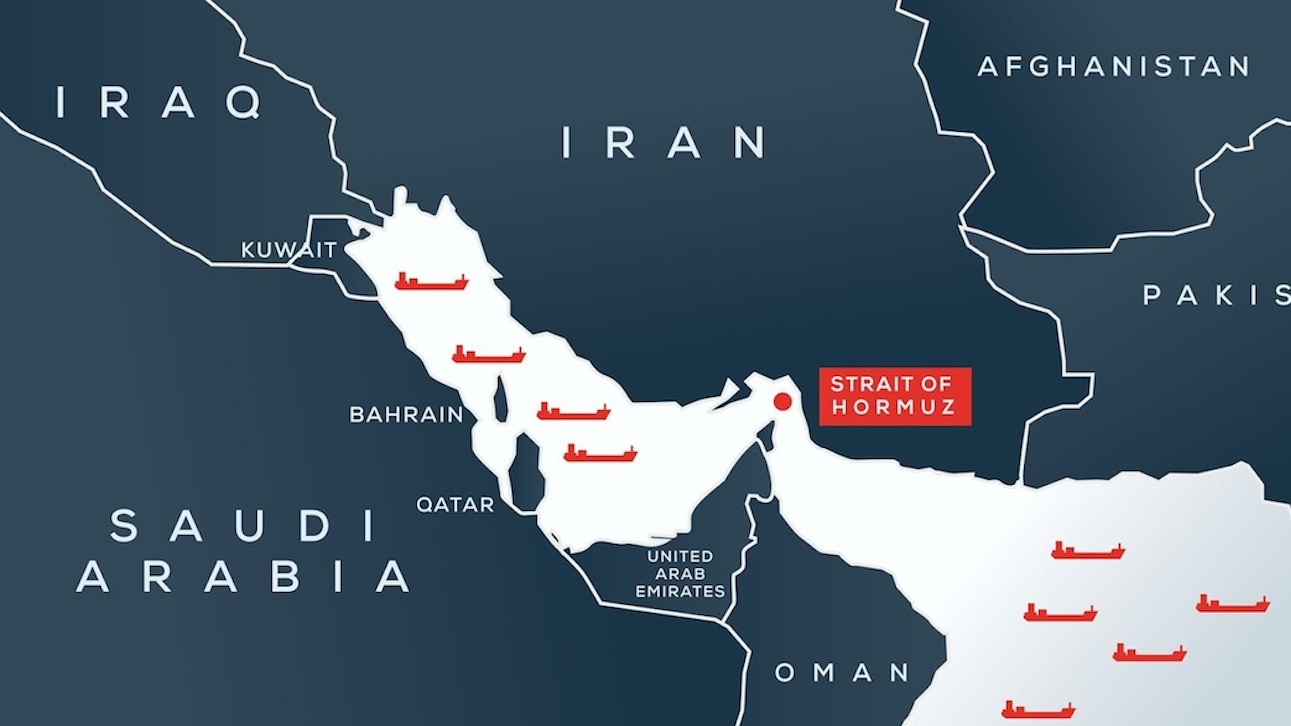
Shipping traffic at the Strait of Hormuz rose slightly, data showed on Thursday, as a geopolitical standoff between the United States and Iran persisted and the market monitored Iran–Oman talks about the waterway, according to Reuters reporting Kpler vessel-tracking data.
Strait of Hormuz transits edge up
The daily count of visible commodity vessel transits at the strait reached 10 on Wednesday, up from eight on Tuesday, and remained below the 10-day moving average of about 15 vessels, data from Kpler showed. On Wednesday, the composition of traffic moving through the chokepoint included:
- Two medium-range fuel tankers
- A liquefied petroleum gas (LPG) carrier
- A Panamax-sized tanker
- Three handymax-sized tankers
These vessels entered the strait from the Gulf of Oman. Departing the waterway into the Gulf were a medium-range fuel tanker, a bitumen tanker, and a bulk carrier, according to the Kpler data cited by Reuters.
The counts reflect visible transits only. Reuters reported that some vessels may be sailing at the key waterways with their transponders turned off and may be missed in the counts, meaning actual throughput could be higher than the recorded figures.
Iran–Oman agreement still in the works
Iran and Oman are still working on the details of an agreement on the Strait of Hormuz, a senior Iranian source said on Wednesday, Reuters reported. The statement followed an earlier announcement from Iran’s Revolutionary Guards that the two countries had agreed on how to share the waterway and its revenue.
Bab el-Mandeb traffic eases for second day
Meanwhile, traffic slowed for a second day at the Bab el-Mandeb strait, the other key waterway monitored by the market. A total of 19 commodity vessels passed through Bab el-Mandeb on Wednesday, with six tankers exiting — including a very large crude carrier — down from 24 on the previous day, according to Kpler data reported by Reuters.
| Waterway | Wednesday transit count | Previous day count | 10-day moving average |
|---|---|---|---|
| Strait of Hormuz | 10 | 8 | ~15 |
| Bab el-Mandeb | 19 | 24 | — |
Implications for shippers and operators
For freight forwarders and vessel operators, the key operational takeaway from the latest Kpler data is that transit counts at both chokepoints remain volatile and below recent peaks. The possibility of under-counting due to switched-off transponders adds uncertainty to any projection of actual traffic, Reuters reported.
The ongoing Iran–Oman talks, if finalised, could reshape how the Strait of Hormuz is managed and how its revenue is shared, according to the senior Iranian source cited by Reuters. Until a final agreement is confirmed, shippers should expect continued scrutiny of both the Strait of Hormuz and the Bab el-Mandeb strait, with day-to-day changes in vessel counts driving risk assessments for Gulf and Red Sea routings.
Watch list
- Any announcement from Iran or Oman on the final details of the Strait of Hormuz agreement, following the Revolutionary Guards' statement that the two countries had agreed on sharing the waterway and its revenue.
- Further Kpler transit data for the Strait of Hormuz and Bab el-Mandeb, particularly whether Hormuz counts return toward the 10-day moving average of about 15 vessels.
- Shifts in the US–Iran geopolitical standoff, which Reuters identified as an ongoing factor alongside the Iran–Oman talks.
- Any reports of vessels transiting with transponders off, which could indicate hidden traffic volumes at either waterway.
Sources: