
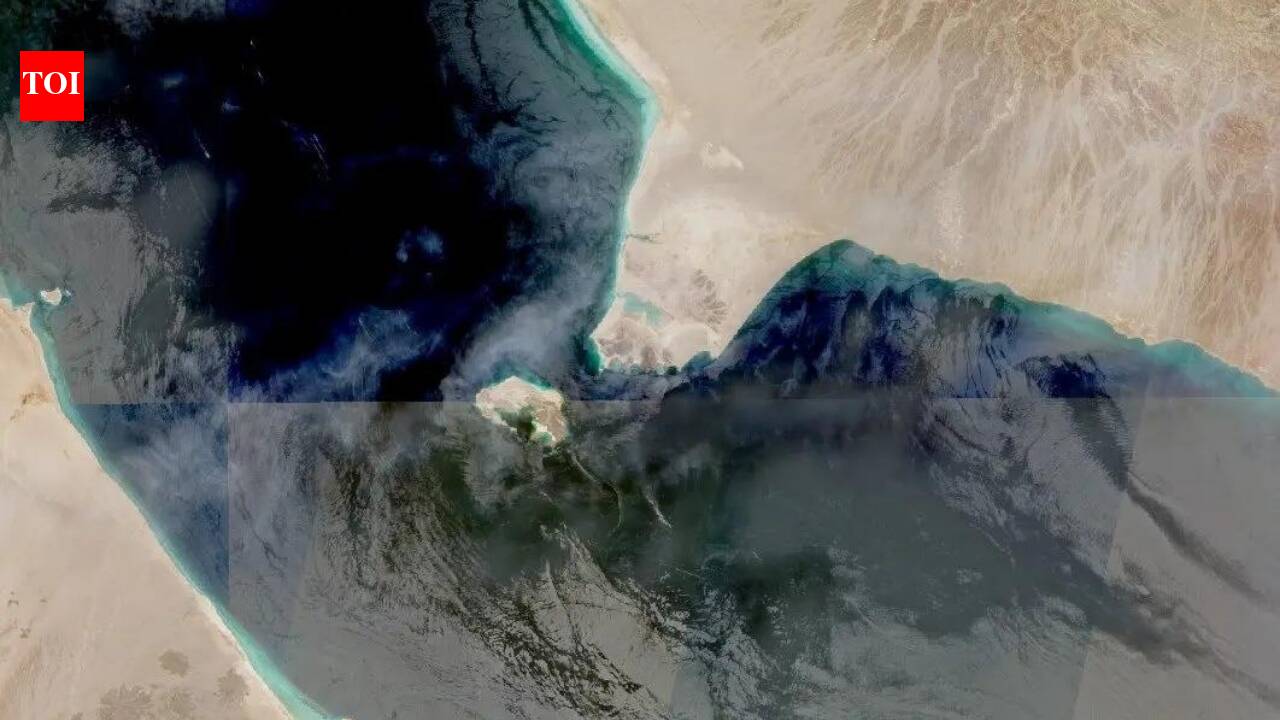
Saudi Arabia's key Red Sea export terminal at Yanbu appeared to log its busiest day since regional shipping was disrupted by Houthi threats, while additional vessels continued transiting the Bab el-Mandeb Strait with tracking systems switched off, according to Business-Today.
Why Yanbu is the Saudi export pivot
According to a Bloomberg report cited by Business-Today, Yanbu has become a critical export hub for Saudi Arabia after the Iran war disrupted shipping through the Strait of Hormuz. To keep crude exports moving, the kingdom has been transporting millions of barrels of oil each day via pipeline to the Red Sea port before shipping cargoes to international buyers. A single VLCC can carry around 2 million barrels of crude.
Satellite imagery captured by the European Union's Sentinel-2 mission showed five Very Large Crude Carriers (VLCCs) docked at Yanbu's oil-loading terminals on Saturday, potentially marking the port's busiest day since Iran-backed Houthi rebels announced a blockade on Saudi ports two weeks ago. Business-Today noted the satellite passes over the area only once every few days, so the berth count is a snapshot rather than a continuous measure.
The Houthi threat has compelled a number of Saudi crude shipments to take alternative routes. Some vessels are now sailing around Africa, while Saudi Arabia has redirected part of its Asia-bound exports from the Red Sea to Egypt's Sidi Kerir terminal on the Mediterranean coast.
Tankers going dark through Bab el-Mandeb
At the same time, some tankers, including those carrying Russian crude, continue to transit the Bab el-Mandeb Strait with tracking systems active. Others are running dark. The Greek-owned Suezmax tanker Lesvos and the India-flagged VLCC Desh Vaibhav passed through the Bab el-Mandeb Strait over the weekend carrying Saudi crude loaded at Yanbu while keeping their transponders switched off, according to analytics firms Vortexa and Kpler quoted in the Bloomberg report. Ship-tracking data showed both vessels later reappeared in waters off Oman after transmitting their positions near the Red Sea export terminal.
| Vessel | Type / flag | Cargo | Movement |
|---|---|---|---|
| Lesvos | Greek-owned Suezmax tanker | Saudi crude loaded at Yanbu | Transited Bab el-Mandeb with transponder off; later visible off Oman |
| Desh Vaibhav | India-flagged VLCC | Saudi crude loaded at Yanbu | Transited Bab el-Mandeb with transponder off; later visible off Oman |
Strait of Hormuz and Persian Gulf crude flows
Security concerns in the region intensified late last week after a liquefied natural gas (LNG) tanker carrying Qatari cargo was struck by a projectile while passing through the Strait of Hormuz, highlighting the risks facing shipowners, Business-Today reported. Observable shipping traffic through the strategic waterway remained limited on Monday. Despite the disruptions, crude exports from the Persian Gulf have continued, largely on tankers operating with their transponders switched off.
Ship-tracking data showed more than 8.4 million barrels of crude exited the Gulf on Friday, making it one of the highest daily export volumes since the Iran war began at the end of February.
More than 8.4 million barrels of crude exited the Gulf on Friday, making it one of the highest daily export volumes since the Iran war began at the end of February.
Shippers and operators: what to watch
The tracking silence documented by Vortexa and Kpler means standard vessel-position feeds will not show every crude cargo moving out of Yanbu. Ocean carriers and freight forwarders should plan for shipment milestones that disappear between the Red Sea terminal and later reporting points, such as Omani waters. With some Saudi crude rerouted around Africa or via Egypt's Sidi Kerir terminal on the Mediterranean, voyage times on Asia-bound flows are stretching, and operators need to factor in additional transit days and possible transshipment handling. For tanker and container schedules tied to the Red Sea corridor, monitoring Yanbu berth occupancy, Bab el-Mandeb crossing behaviour, and the Strait of Hormuz — where an LNG tanker was struck late last week — will matter for schedule integrity.
Watch list
- Next Sentinel-2 pass over Yanbu: the satellite covers the area only once every few days, so the next image will show whether five-VLCC berth occupancy persists or eases.
- Strait of Hormuz: observable shipping traffic remained limited on Monday after the LNG tanker strike, and exports continue on dark tankers.
- Bab el-Mandeb tracking gaps: some tankers carrying Russian crude still transit with tracking systems active, while Saudi-loaded tankers are running dark.
- Persian Gulf export volumes: Friday's 8.4 million barrels was one of the highest daily totals since the Iran war began; further strong days will test terminal and vessel availability.
Sources:


