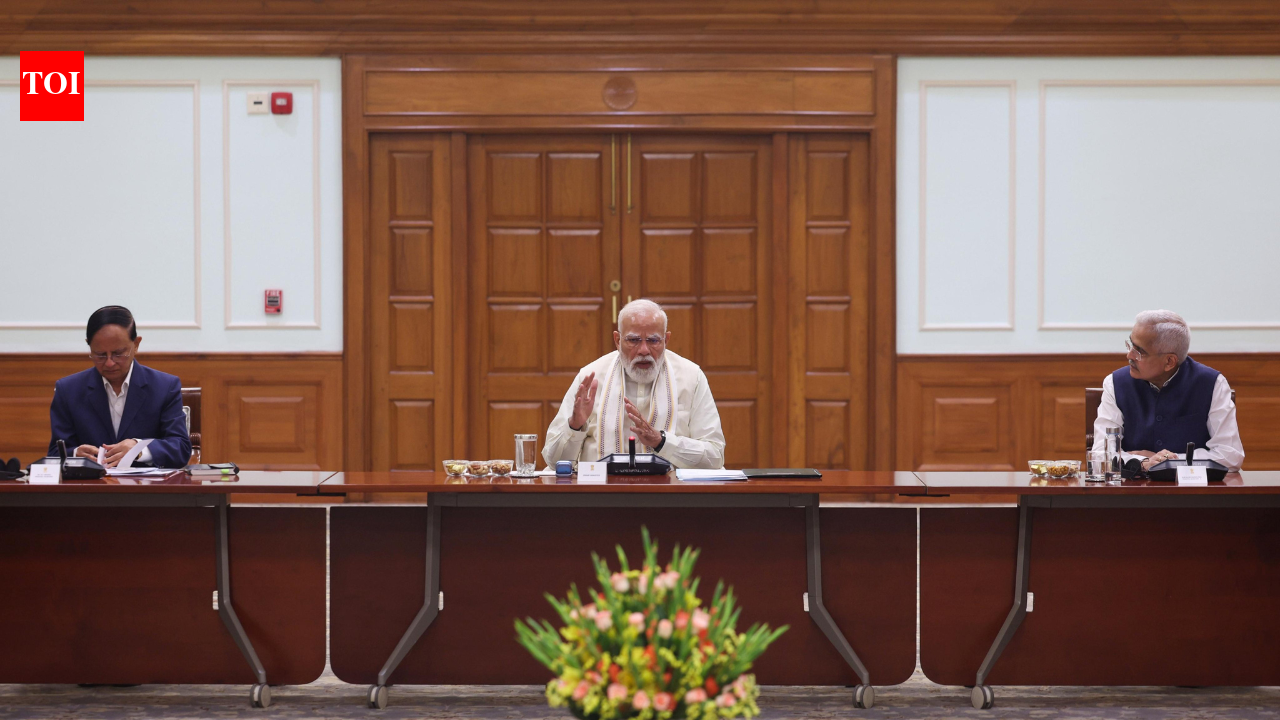
Prime Minister Narendra Modi convened a meeting with the Economic Advisory Council (EAC) to address strategies for enhancing India's economic growth amidst global trade challenges. The meeting, held on June 6, 2026, focused on reforms to improve the ease of doing business and living in India.
Economic Growth Amid Global Turmoil
The EAC meeting comes in the wake of the Reserve Bank of India's (RBI) decision to maintain the policy repo rate at 5.25%, reflecting a neutral stance amid geopolitical tensions and supply chain disruptions. RBI Governor Sanjay Malhotra emphasized the need for economic resilience, citing heightened uncertainty and disruptions to trade routes as significant challenges.
"Policymakers should use the disruption as an opportunity to further strengthen economic resilience," said Malhotra.
Revised Economic Outlook
The RBI has revised its GDP growth forecast for FY2026-27 to 6.6%, down from 6.9%, due to elevated energy prices and global financial volatility. Inflation projections have also been adjusted upward to 5.1%, driven by rising global crude oil prices.
| Indicator | Previous Estimate | Revised Estimate |
|---|---|---|
| GDP Growth | 6.9% | 6.6% |
| Inflation | 4.6% | 5.1% |
Attracting Foreign Investment
The RBI expects stronger foreign capital inflows following measures to ease external financing conditions. These include expanding foreign investor access to government securities and easing restrictions under the Fully Accessible Route.
Impact of Geopolitical Tensions
The EAC discussed the impact of the Middle East conflict on India's trade and economic outlook. Soaring energy prices and supply chain pressures were identified as key risks, with central banks globally balancing growth support with inflation control.
Conclusion
India's strategic focus on economic resilience and attracting foreign investment aims to mitigate the impact of global trade challenges. The EAC's discussions underscore the importance of adaptive policy measures in navigating economic uncertainties.