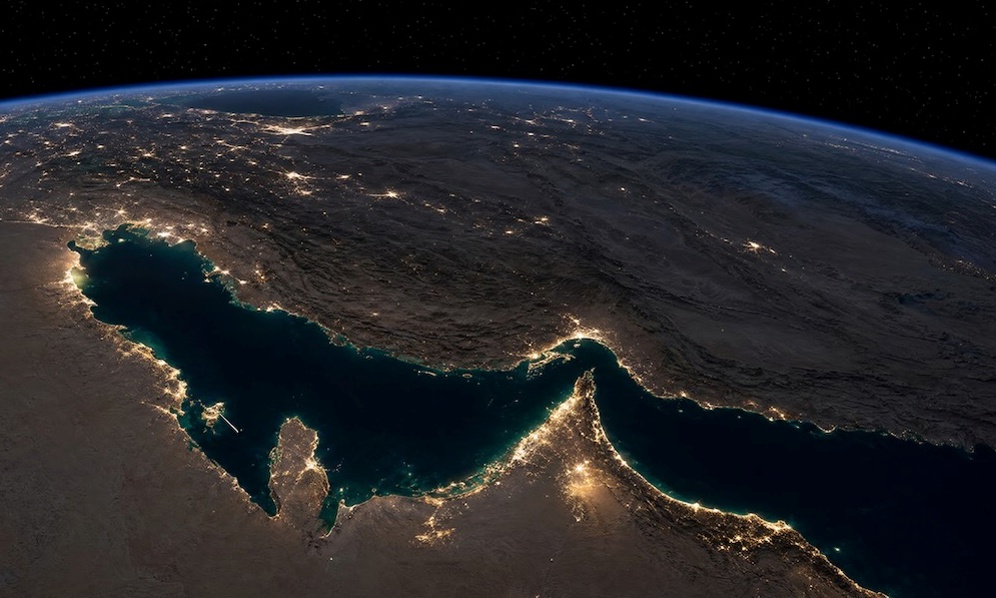
The Strait of Hormuz remains one of the world’s most dangerous waterways despite diplomatic progress toward reopening the vital shipping artery, with explosions reported in the area, vessels still requiring military protection, and uncertainty lingering over when normal trade can resume, according to Splash247.
Strait of Hormuz Threat Level
Several explosions were heard in the strait on Monday, and reports emerged that Iranian forces fired on a vessel attempting to transit. Industry sources told Splash247 that ships without permission from the Persian Gulf Security Authority (PGSA) are still not permitted to pass independently, with some vessels transiting under US air support. The US military has warned shipowners not to attempt crossings until a formal peace agreement between Washington and Tehran is signed on Friday. The Joint Maritime Information Center (JMIC), part of the US-led Combined Maritime Forces, maintained its threat assessment at “severe” despite the diplomatic breakthrough. JMIC stated: “Mariners should expect increased naval presence, enhanced force protection postures, potential VHF hailing and congestion near anchorage areas.”
Operational Reality Ahead
There are tentative signs that traffic is beginning to move. Iranian state media reported that several Iranian vessels have already passed through the US-enforced naval blockade zone in the Gulf of Oman following a preliminary agreement. US President Donald Trump, speaking on the sidelines of the G7 Summit in France, suggested shipping movements were gradually resuming: “The strait is already partially open. They are doing a little hunting for a couple of mines that they’ve already found. Ships are starting to go out. On Friday, it’ll be completely open.” Vice-president JD Vance indicated a formal announcement could come sooner, suggesting the deal may already be signed. However, shipping markets remain cautious. Charu Chanana, chief investment strategist at Saxo Markets, said: “Even as the market reacts to Hormuz opening headlines cleanly, the operational reality is likely to be messier. Mine-clearing, insurance costs, port congestion and the risk of geopolitical spoilers could all keep barrels moving more slowly than the headline suggests.” Shipbroker BRS warned that any recovery in traffic volumes is likely to be gradual: “All told, if the deal is signed on Friday and then holds, we suggest that it should take four to five months for maritime traffic to return to normal in the strait.”
Biofouling and Stranded Vessels
Even if security conditions improve, shipowners face another challenge: biofouling. More than 500 vessels have reportedly been stranded across the wider Gulf region since the crisis erupted on February 28. Many have spent months anchored or drifting in some of the warmest waters encountered by merchant ships. The Persian Gulf and Gulf of Oman routinely record summer sea surface temperatures above 30°C, creating ideal conditions for rapid growth of barnacles, algae, biofilm, and other marine organisms. Anti-fouling coatings are designed for vessels sailing at normal speeds; prolonged inactivity significantly reduces their effectiveness. The consequences could prove costly:
| Factor | Impact |
|---|---|
| Moderate hull fouling | Increases fuel consumption 15% to 30% |
| Heavier marine growth | Even larger fuel penalties |
Owners hoping to quickly reposition vessels may instead face higher bunker bills and reduced performance. There is also a regulatory risk: countries including Australia, New Zealand and parts of the United States have introduced stricter biofouling regulations.
Implications for Shippers and Operators
For freight forwarders, ocean carriers, and logistics managers, the immediate takeaway is that transit through the Strait of Hormuz remains highly risky and effectively blocked until the Friday deal is signed and implemented. Even after that, a gradual return to normal over four to five months means shipping schedules and oil/container flows will remain disrupted. Insurance costs will stay elevated, and vessels emerging from prolonged idling may require dry-docking for hull cleaning, further delaying redeployment. Shippers should anticipate extended lead times, potential rate volatility in the tanker and container markets, and continue to evaluate alternative routing or buffer stocks.
Watch List
- Friday peace agreement signing: If signed, mine-clearing operations will commence; any breakdown could escalate threats.
- Insurance market reactions: War risk premiums will likely remain high until safe transits are verified.
- Port congestion in the Gulf: As vessels reposition, ports may see sudden influx, straining berth capacity and dwell times.
- Biofouling enforcement: Regulatory actions by Australia, New Zealand, and US regarding stranded vessels could impose cleaning requirements before entry.
Sources: