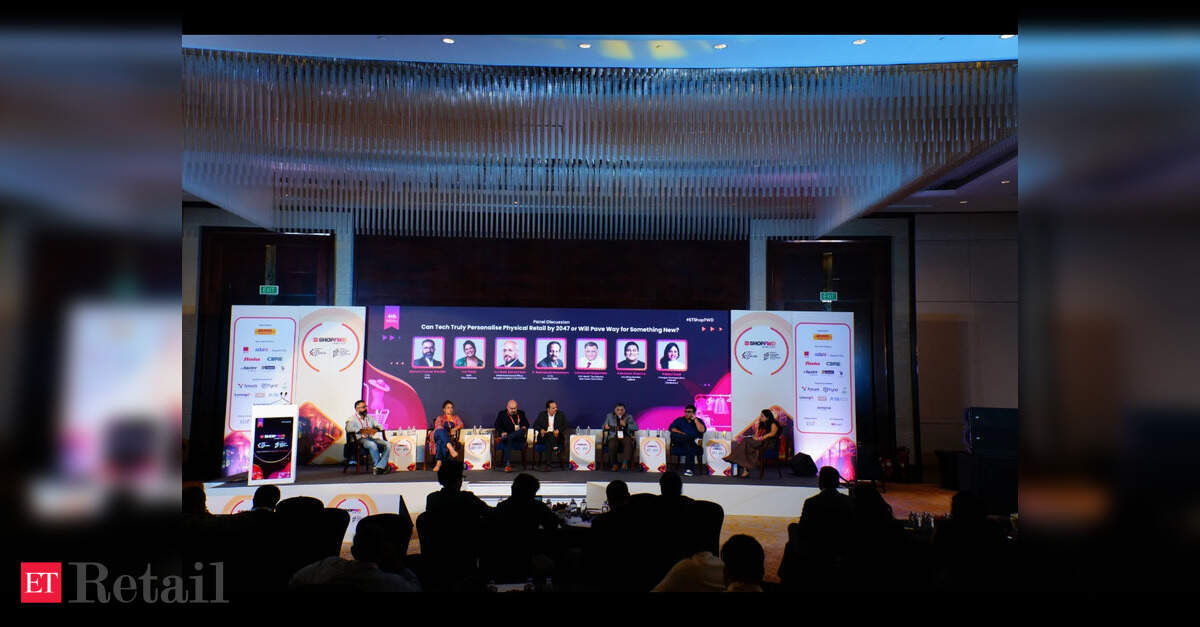
At the 4th ETRetail ShopFWD Summit 2026 in Bengaluru, executives from GIVA, Titan Watches, Bangalore Airport City, Ramraj Cotton, SAS Infra and Urbanic tackled a question that sits at the centre of retail technology strategy: can tech truly personalise physical retail by 2047? According to the ETRetail report on the panel, the consensus was that digital discovery and data-led personalisation are becoming significantly more sophisticated, but the physical store continues to play an important role in validation, touch and feel, human reassurance, and post-purchase service.
Store employees as the bridge between digital and physical
Naresh Kumar Kachhi, CTO of GIVA, told the panel that one of the clearest lessons of the pandemic was that digital commerce did not eliminate the consumer's need for human interaction. According to ETRetail, he said online channels play an increasingly important role in discovery, but consumers still visit stores to validate purchasing decisions, particularly in categories where touch, feel and personal assistance matter. Rather than focusing only on customer-facing screens or applications, Kachhi said, GIVA is investing in helping store employees access better product knowledge and improve the quality of customer interaction. The goal, he said, is to make the salesperson more informed and effective rather than attempt to remove the human element from the transaction.
Vin Palat, CDO of Titan Watches, echoed that view for watches and jewellery, where purchases can carry emotional, gifting and high-value considerations. In these categories, a store employee who can provide reassurance remains important even as consumers become increasingly digitally informed. Palat argued that technology should enable the employee to see the customer's wider relationship with the brand — including previous discovery, purchase and service interactions. If someone has already interacted with the brand online, the store conversation should continue from that point rather than restart from scratch.
"You're just connecting that conversation. You're not redoing that conversation."
Palat also pointed beyond purchase: for categories involving exchanges, servicing and repairs, the post-purchase experience is equally important. According to the ETRetail report, a connected customer view can help staff recognise prior problems and respond more empathetically when the consumer returns to the store.
Removing friction versus creating desire
Avishek Bambii Das, Chief Commercial Officer of Bangalore Airport City Limited, drew a distinction between technology that removes friction and technology that actually makes consumers want to visit a physical destination. According to ETRetail, retailers have already deployed technology extensively across supply chains, demand planning, logistics and inventory management. The more difficult question, Das said, is whether technology can create excitement.
"Technology has, of course, made life convenient; it's reduced friction. But what keeps us awake at night and excited to come to office the next morning is: can tech create desire?"
Das cited experiential retail concepts where technology is used not simply as infrastructure but as part of the attraction, according to ETRetail.
Who was on the panel
The discussion ran under the title "Can Tech Truly Personalise Physical Retail by 2047 or Will Pave Way for Something New?" and was moderated by Pallavi Goel, Principal Correspondent, ETRetail. The panel comprised:
| Executive | Role | Company |
|---|---|---|
| Naresh Kumar Kachhi | CTO | GIVA |
| Vin Palat | CDO | Titan Watches |
| Avishek Bambii Das | Chief Commercial Officer | Bangalore Airport City Limited |
| R. Ramasubramaniam | CITO | Ramraj Cotton |
| Indraneel Majumdar | CEO, Retail, The Address | SAS iTower (SAS Infra) |
| Ashutosh Sharma | Founding Member | Urbanic |
According to ETRetail, the leaders said technology will increasingly connect discovery, inventory and customer intelligence, but physical retail will continue to depend on human interaction, trust and experiences strong enough to create desire. The debate frames the next phase of retail technology: not building more customer-facing screens, but equipping store employees with the data — and the context — to act in real time. The result, the panel suggested, is a store that understands the customer's history and picks up the conversation where the brand last left off, whether that was online, on a prior purchase, or during an earlier service visit.
Sources: